My Afterthought of No One’s World (Part I)

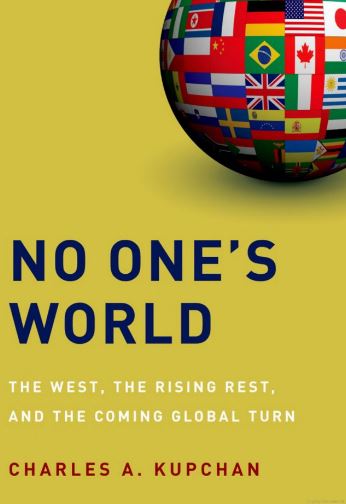
Summer read: “No One’s World” by Charles A. Kupchan

In the book No One’s World, as the title suggests, no country, region, or political model will dominate in the 21st century. “It will belong to no one,” wrote the author, Charles A. Kupchan. In his view, a new global order is in the making consisting of a revived West and emerging powers derived from various polities. The notable variants of autocracy include China-led communal autocracy, Russian-led paternal autocracy, and tribal autocracy such as the sheikdoms of the Persian Gulf. Iran is a prime example of theocracy; African countries make up the club of strongmen; and populism dominates Latin American politics.

I’d imagine the surprising response, perhaps in disbelief, that the author might have received when his book first hit the shelf in 2012. It was so unconventional in the West to give a nod to the non-democratic states like China and Russia. But if we put down our skepticism and judgment to read the book, there’s more truth to Kupchan’s vision of a no one’s world, even when we’re in 2020 bracing for crises one after another. There has been a lot that’s happened in the last eight years. The rising powers that appeared in Kupchan’s book all have faced some sorts of obstacles in their path of development.

To name a few: the failed Turkish coup in 2016 and the following purge targeting its intellectuals have further strengthened President Erdoğan’s grip of power. His latest move to covert the UNESCO World Heritage-recognized great cathedral of Hagia Sophia into a mosque and an Istanbul’s Chora church museum to a mosque has bolstered his religious nationalism. In 2016, India introduced an abrupt and drastic currency reform under Modi, banning the 500 rupee ($7.50) and 1,000 rupee ($15) notes which made up about 86% of all cash in circulation. Brazil, Russia and South Africa have been in recession. Growth has slowed in China and India. Back in 2001 following the 9/11 attacks, Goldman Sachs coined the term “BRIC” in its report, “Build Better Global Economic BRIC,” with a sanguine outlook for Brazil, Russia, India and China to reshape the world economy. South Africa joined the club in 2010. Today, facing another world economy slowdown as a result of the covid pandemic, the BRICS nations act as symbols rather than something that challenges the IMF. Even the coinage inventor Jim O’Neill said in his hindsight interview that it could have been “IC” rather than “BRICS.

The term “emerging powers” is contentious as the Oxford Bibliographies explains: “To be described as an emerging power, a country usually needs to be large (both regarding geographic extension and population, though not always, as the case of Japan shows) and poorer on a per capita basis than industrialized countries, though there is no clear definition of where a country ceases to ‘emerge.’” In Kupchan’s No One’s World, BRICS came up a number of times. The author expounded his argument on emerging powers attaining modernity on a non-conventional path if we perceive the rise of the West as conventional. To steer away from the beleaguered BRICS and make the grouping of “emerging powers” current and inclusive, I’m using World Bank’s acronym, EMDEs (emerging market and developing economies), instead.       

While EMDEs are focusing on development and perhaps consolidation of power as well, the United States and the United Kingdom share the same detrimental fate—political polarization and xenophobia. Brexit is a painful historical lesson of xenophobia. So is the humanitarian crisis at the US border. And yes, the 45th president of the U.S. has upended foreign policy, making Kupchan’s No One’s World more of a reality than a fantasy. Despite all that, if we let the global stage pause at 2012, the author’s viewpoint is coherent with what then was the long-standing theme of U.S. foreign policy, that is, pluralism. The pluralistic world order calls for international cooperation and “more geopolitical responsibility,” as Kupchan put it, in response to pressing global issues. Kupchan suggested that “multilateral cooperation offers the most effective means of combating nuclear proliferation, terrorism, cyber-attack, and other threats. (Kupchan, p.173)”

Climate change is a great “threat multiplier” in Sherri Goodman’s coinage. As of this writing, Death Valley in Southern California reached 130 degrees Fahrenheit this summer (August 17), marking the hottest recorded temperature on Earth since 1931. The Greenland Ice Sheet is melting fast to a point that scientists believe it is unlikely to stop from disintegrating. If only all nations prioritized climate change as a national security issue, heads of state would be able to learn that almost all domestic issues that they touted they would tackle are interconnected with climate change.

Kupchan further explained how to facilitate regional devolution, which reminded me of systems leadership that requires collaboration, coalition-building and systems insight to mobilize action across a decentralized network. He wrote, “The diffusion of global power ultimately means the diffusion of international responsibility—from the Atlantic community of democracies to a broad array of states in good standing in all quarters of the globe. A new distribution of power necessitates a new distribution of responsibility, and effectively tackling many of today’s challenges requires broad cooperation across region and regime type. (Kupchan, p.197)”

If only the pandemic would quicken action to fulfil Kupchan’s call for a new distribution of responsibility. How would the world look if EMDEs were given more mic time at the UN assembly, more roles to play in decision making posts of intergovernmental organizations, and more leadership education? Will the big industrialized countries together with China and Russia be willing to delegate authority to smaller countries and open the doors for EMDEs to weigh in? Even among big nations, will they share information on equal footing without peppering biases and hostility? Despite all the controversy, many Americans work at WHO. When China informed WHO about the novel coronavirus in early January, the WHO staff, regardless of which countries they represented, would have known about that information. Since bad news always travels fast, how could we not think that the US representatives at WHO would have simultaneously informed the public health agencies in the US? The US touts open information and free press. How long would it take for such crucial piece of public health warning to reach the shores of the US? The US government’s delay of response to covid is a fact. The rest has become history. And we’re living in it.   

We’ve heard a lot of the word “unprecedented” in the US politics of late, and yet the status quo remains. I’m intrigued to learn from No One’s World that the US “has been sacrificing the lives of its soldiers and spending about $100 billion annually to bring stability to Afghanistan. (Kupchan, p.102)” No doubt that the US has become more militarized after 9/11 attacks. How many lives would a budget of $100 billion annually benefit domestically? Can we infer that the hard stance toward allies and adversaries from the incumbent administration is a strategy for the hawks to maintain their status quo left over from the peak of military spending? Under the current administration, establishing the US Space Force, resuming arms sales to Taiwan, and building the US-Mexico border wall are all costly deals that benefit only some interest groups. Space exploration should be regulated as an inclusive endeavor for humanity, not as a competition ground for big countries. Furthermore, if we look at how costly today’s elections are in the US, fighting for democracy indeed is costly, both economically and emotionally. No wonder a seasoned salesman was elected to occupy the White House. No wonder the average age of incumbent US Senators is 61.8 years, among the oldest in US history. Political mobility has reached a stalemate. Kupchan may need to write a sequel for young prospect leaders to barely survive, let alone breaking the norms, in no one’s world.

Systemic problems are seen in every corner of the world. I’ll explain in part two why neither the US nor China should be afraid of one another if they value the fact that cooperation trumps isolation in no one’s world. (I thought I could have avoided the word “trump”. Funny that I said it at last.) 
The Fifth Crisis

Summer read: “The Emperor’s New Clothes” by Hans Christian Andersen

We’re back in speech season! This is my favorite time when public figures regardless of political backgrounds come on stage to face the nation during presidential nomination conventions. Joe Biden’s acceptance speech left a mark on me when he said the country underwent four concurrent crises—the covid pandemic, economic slowdown, anti-racism movement, and climate change. I’d add the fifth crisis—the trust crisis.

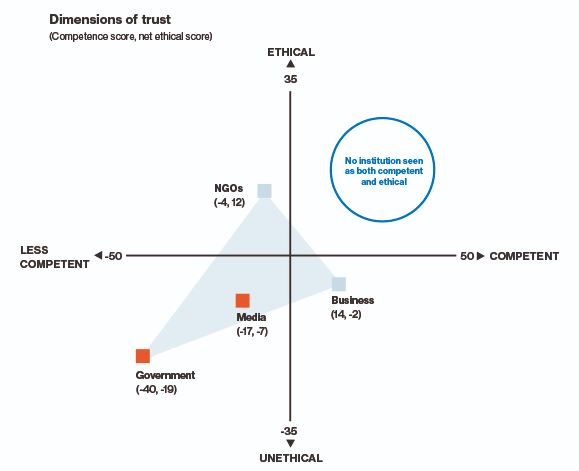
I’ve expressed my view on trust in previous posts—“Let’s Talk About Trust (two series),” so I’ll spare you from my litany. Before the pandemic, the 2020 Edelman Trust Barometer revealed that despite a strong global economy and near full employment, none of the four societal institutions—government, business, NGOs, media—is trusted. A growing sense of inequity is undermining trust, said the report. In comparison of competence and ethics which are two distinct attributes of trust, none of the four institutions is seen as both competent and ethical. Government does even worse than media in spite of the fact that both are perceived as incompetent and unethical. Now I have some inklings about why my frustration in what I’m about to share with you stems from incompetent leaders. Earlier this month, I was asked to share my view of the anti-racism movement. Out came the following essay. It takes time to build trust, let alone rebuilding trust that was lost by malicious rhetoric, deception, and bullying. Only if we could reimagine a crisis and commit to our good deeds by action rather than words in the context of others, perhaps time will give us a second chance to trust someone again. Whatayathink?         

The 2020 Edelman Trust Barometer

Here is the essay:

Having lived in China for a good number of years, I’m very familiar with what an ordinary life under an authoritarian power is like. What pains me is this year I saw how this authoritarian style of governing has infected rank and file like a virus among leadership in the United States, and how abuse of power and disinformation have torn apart every facet of our democracy. The devastation is impactful both at home and abroad, both personal and collective. The covid pandemic has turned a spotlight on the broken systems—from supply chains and public health to job security and environmental justice—at which we would normally keep a blind eye. The all-too-familiar anguish of racism in not only an American problem—and yet the most typical interpretation of Americanism—it’s also a global problem. Racism has plagued humanity for centuries. If we look back the history, it found roots associating with prejudice and bias. The most prominent form of racism on display includes Shakespeare’s dramas, Othello with its comment on color, and The Merchant of Venice with its anti-Semitism theme. These past months I’ve delved into history of the Anthropocene while contemporary history is unfolding before my eyes. Against the backdrop of a sluggish economy with business as usual (as opposed to thriving e-commerce), humanity is struggling to move forward like James Baldwin’s proverbial “people trapped in history.”

Among many core values that I hold, trust is the most violated in the world right now. On more than one occasion during my sustainability study, I’m asked how I would influence others on climate adaptation. The more I listen to different experts as well as ordinary people about their perspectives of climate change, the more I realize this is more of a communication problem. It’s more than what we say but how we say it and who says it to the audience—they matter. To prevent covid, wearing a mask or not is a trust problem. Reopening business and school is a trust problem. Even in the subject of race and racism, minorities may find more trust in their clergymen than in Dr. Fauci. White cops lost trust among black folks. First-generation immigrants mingle with their own ethnic group based on trust. I notice that African American journalists are often assigned to interview people of their same color, the same with other ethnic reporters. Is it a bias-based management decision? Or is it an assurance tactic for the interviewee to wear her heart on her sleeve before the person who looks like her?

The most uncomfortable truth is we are living in a country led by apathetic liars. Because of disinformation by public figures, oftentimes those who hold important roles, the American public is becoming ever more polarized, at some point, even backward. In systems thinking, the idea of white supremacy is in a reinforcing feedback loop, gaining momentum from these liar leaders. The public may not trust a public officer, the person per se, but their titles are supposed to be authoritative. Who would question the nation’s top health organization? But in this day and age, misinformed citizens do cast doubt and even dismiss CDC guidelines. Sadly, we have many embarrassing American leaders right now on active duty. 

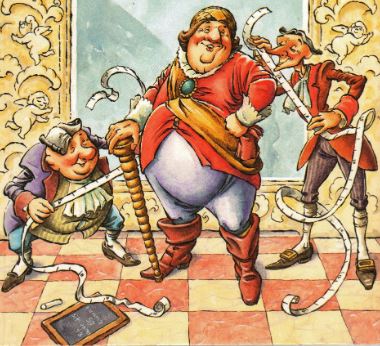
Whether it is in the battle of covid or of mitigating climate change, we cannot live in Hans Christian Andersen’s fairy tale, The Emperor’s New Clothes. I continue to speak out through my writing in hope to give voice to the voiceless. It may not change much but there is at least one voice on this planet to tell the world: “[The emperor] He’s wearing nothing!” If we don’t resist falsehood and translate climate science into action, the price of loss will be too costly. The covid pandemic is a real-life lesson from history.

In view of climate mitigation and adaptation under incumbent administration, the United States will be left behind while other countries are taking action bound by the Paris Agreement. I don’t think the silent majority in America will be silent on this decision. Reading “the SDSN Statement on Racial Inequality” and alike by executives of different organizations and institutions reaffirm my belief that we have good role models of leadership in this country. We also have young generations who are more conscious about social and environmental injustice than ever. Joining them together in the field of sustainability, I’m energized by like-minded global citizens and leaders who rise to the occasion to provide expertise, insight and hope.

From Planet Junk to Space Junk

Artist’s impression from National Geographic.

We are living on a planet full of discards. On land, we’re disposing billions of tons of junk into landfills with capacity shrinking annually. At sea, our junk, especially plastic waste, is polluting the streams and ocean. With rapid technology advances, space exploration is no longer an exclusive activity of one country. More countries flex their muscles with space projects. This July the Mars’ orbit comes closest to Earth, making it possible to go from one planet to another in the shortest time. The United Arab Emirates, China and the United States all launched missions to Mars last month. Are we going to see space debris scattered on Mars in the near future? Not to mention that China launched its final Beidou satellite this summer. Space is greeting an increasing number of foreign objects from this blue planet. As China and the US are in the heat of a tech cold war, neither of these two space explorers is expected to share with one another space equipment and acquired data to reduce overlapping infrastructure costs and space junk. In fact, on the grounds of national security concerns, they are likely to get rid of one another’s established hardware and become reliant on their domestic brands. Like the already staggering electronic waste from the two biggest contributors, China and the US will leave their mark on space in the form of space junk.

I’m working on an academic paper on electronic waste and recycling. That’s why I’m becoming more aware of the “500-billion-dollar” waste industry as Adam Minter estimated in his book,  Junkyard Planet. According to the US EPA, in 2017, about 139.6 million tons of municipal solid waste was landfilled. Food was the largest component at about 22%. Plastic accounted for about 19% as the second largest component. Also in the same year, China announced a ban on  foreign imports of solid waste including plastics, paper products and hazardous waste. The  Chinese leadership would rather spend on solutions to save money than spend a fortune in post-disaster recovery. Like the “Sponge City Initiative,” China is switching gears promptly for a green economy by incorporating strategies practiced in foreign countries with its local implementation. It then sets an example for the neighboring countries to emulate, a strategy which is perceived as pushing Chinese influence by hawkish, western pundits. Nevertheless, if Chinese cities can manage urban waste problems and share experience with other municipalities, that will be a positive influence to the environment, won’t it?

This October the highly-anticipated 14th five-year plan will be unveiled in Beijing. The long-term plan will set the tone for China’s sustainable development in the next five years (2021-2025). Global think tanks and institutions are preoccupied with forecasts and analysis of the Politburo’s would-be plan as if they were making their best bet for the winner in the Kentucky Derby. One of the predictions is that China will seek more autonomous development by cutting reliance on the US for technology supply and exports. That’s not the good news for the global waste industry.

In fact, the covid pandemic has caused an uptick of plastic use, from masks and gloves to takeout containers and delivery packaging. Is this a negative externality of our house-bound social distancing? Environmentalists found a new type of garbage washing ashore—masks. Dozens and dozens of disposable masks. Plastic is ubiquitous in our everyday life. Researchers discovered this June that “plastic rain” was pouring down in our national parks including big household names such as the Grand Canyon. Over 1,000 metric tons of microplastic, which is the equivalent of over 120 million plastic water bottles, fall on eleven protected areas in the western United States annually. Isn’t this an epitome of the saying “what goes around comes around”?

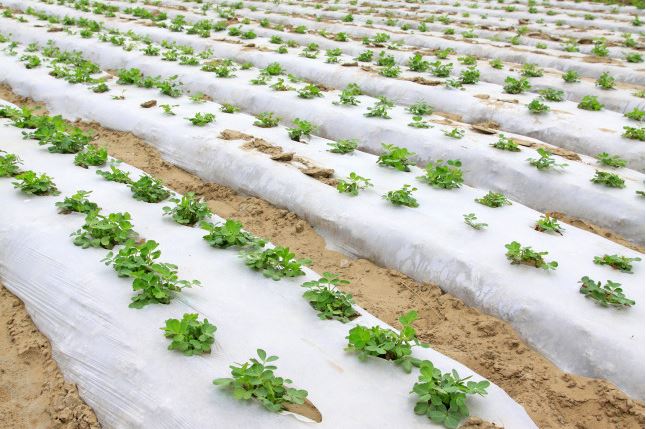
I’m surprised that neither in China nor the US, few policy advisors advocate for the cutback or even elimination of plastic use. An environmental report shows plastic greenhouse vegetable cultivation (PGVC) has expanded worldwide, particularly in China, where it accounts for more than 90% of all global PGVC operations. Chinese farmers apply the plastic-film mulch to their crops in order to block weed growth and protect the soil from erosion. The plastic also helps warm the soil and conserves water. China is not alone; the US farmers also use plastic mulch and plastic containers. One third of the agricultural plastics are used in Florida. If plastic is going to be with humankind for the foreseeable future, from an economic viewpoint, China and the US can make the best out of it by working together to reduce negative impact of plastic.

Plastic mulch is common in China and in the U.S..

Like the emperors in imperial China, the Chinese Communist Party, as the one-party ruler of the state, has an absolute authority to determine how to spend “the people’s” coffers. This is why almost all Chinese engineering infrastructure, from bridges and motorways to hydroelectric power stations and nuclear power plants, are completed at lightning speed. Dissent is silent and watchdogs follow the party line too. To date it is still a marvel to the world that China built two Fangcang shelter hospitals in Wuhan, once the epicenter of the covid epidemic, in merely six days on an around-the-clock work schedule. China is heading for a green economy but with many paradoxes including its support for PGVC and coal-fired power plants. The US is struggling to maintain its supremacy by alienating itself from global cooperation. And yet the trajectory of man-made discards is heading upward and is already expanding outside the boundary of the Planet. If we do not come to terms sooner to regulate and monitor our discards in the common spaces, are we digging our graves now to bury ourselves with our junk?

(P.S. To consolidate my time for quality writing, I’ll share my graduate paper findings in the future posting. Stay tuned!)

Destitute Nation Within A Wealthy Nation

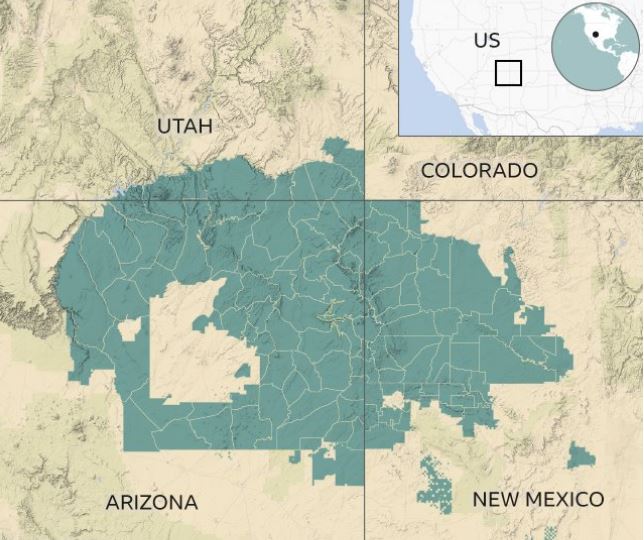
Photo courtesy of BBC.

When I was in New Zealand last year, I was asked by locals what social benefits are given to Native Indians in the United States. I was tongue-tied partly because I was ignorant about the subject, and partly because my Kiwi host talked enthusiastically and with great pride about the Māori and their importance in the fabric of society. I knew no way that I could brag about the indigenous people of my country receiving treatment equal to that of the Māori. In fact, after I came home I turned to Google search for everything about Native Indians. Each headline read grimmer than the previous. Are the Indians living in a destitute nation within a wealthy nation?

I made my new year resolution in the first post of this year. I dedicated 2020 to endangered species and languages. Unfortunately, the covid pandemic hit every corner of the globe in 2020. Reports about endangered species and languages are affected in the lens of covid. Each time I read about Native Americans, my heart sank. Here are a few titles from the media to ground you to 2020:

How The Pandemic Threatens Native Americans—and Their Language (The Economist, May 19)

Navajo Nation: The People Battling America’s Worst Coronavirus Outbreak (BBC, June 16)

The Navajo Nation Faced Water Shortages For Generations—And Then the Pandemic Hit (The Verge, July 6)

The water problem of the Navajo Nation is chronic but in the lens of covid, it becomes inhumanely acute. Arizona and New Mexico are an epicenter of the covid pandemic in the United States, and the Navajo Nation—the largest Indian reservation with more than 173,000 people—is right in the middle of it, suffering from water scarcity amidst a pandemic. It is hard to imagine how many people can escape from this dire situation. How can many smaller Indian tribes whose names don’t even register to majority Americans live in these troubling months.

I can’t tell my Kiwi host these frightening stories. I can’t even justify my own perception of the well-known statement in the United States Declaration of Independence that “We hold these truths to be self-evident, that all men are created equal, that they are endowed by their Creator with certain unalienable Rights, that among these are Life, Liberty and the Pursuit of Happiness.”

Access to water and sanitation is recognized by the United Nations as human rights. In 2020, there are still American citizens on the soil of their native land who are deprived of these basic human rights. How preposterous!

Many homes in the Navajo Nations are multi-generational. Without the availability and access to water, thousands of indigenous residents cannot wash their hands regularly, making it easier to spread the virus to elderly and vulnerable family members and neighbors. The nightmare in poor African countries that covid can devastate communities with weak public health systems can also take place in the world’s superpower and ironically labeled “Made in USA.” In Navajo, coronavirus is translated as Dikos Ntsaaígíí-19, or Big Cough-19. Given the fact that the elders who speak the tribal language fluently are among the vulnerable age group of Big Cough-19, how many of them will survive to explain the nuances of Dikos Ntsaaígíí-19 and Big Cough-19?

What struck me was the fact that the Navajo Nation sprawls across three states—Arizona, New Mexico and Utah with an area of over 27,000 square miles and has only 13 grocery stores. The size of the Navajo Nation is often compared to that of the state of West Virginia. Months ago I read an article that finding a Dollar General store in West Virginia was much easier than finding a grocery store. I wonder how many Dollar General stores are in the Navajo Nation.

We don’t see Dollar General stores in metropolises like Washington DC. But we do see grocery stores become an indicator of socioeconomic changes and well-being. Even in a city like DC, which is small compared to Houston, Texas, grocery stores are not evenly located in eight wards of our wealthy nation’s capital. In 2016, there were 49 grocery stores in DC and the average number per ward was six. A social group found that Ward 7 had two full-service grocery stores and Ward 8 had just one. Whereas the highest count was in Ward 6 with 10 full-service markets and three more on the way.    

We don’t see a fair number of grocery stores in West Virginia and in the Navajo Nations. Should we adopt Dollar General stores as a new socioeconomic indicator for rural America? A typical way for leaders who have the ostrich mentality is to look for comparison to confirm the self-belief that they are not in the worst scenario. Following that mindset, should West Virginians see themselves better off by comparison to their fellow citizens in the Navajo Nation? But water contamination has plagued West Virginia for years. A notable case was DuPont’s water contamination with chemical C8, which was even made into a 2019 movie Dark Waters starring Mark Ruffalo. Another was the 2014 Elk River chemical spill. A 2019 study found that West Virginia counties are among the “worst in the nation” for drinking water violations. Water scarcity and poor water quality. Is this a choice for destitute citizens in a developed country in 2020? Is this the contemporary rendition of A Tale of Two Cities?

While we think of the people from a destitute nation within a wealthy nation, a nation of polarized opinions and agendas, let’s also ponder the classic quote from Charles Dickens that can be applied to the fight against the pandemic:

“It was the best of times, it was the worst of times, it was the age of wisdom, it was the age of foolishness, it was the epoch of belief, it was the epoch of incredulity, it was the season of Light, it was the season of Darkness, it was the spring of hope, it was the winter of despair, we had everything before us, we had nothing before us, we were all going direct to Heaven, we were all going direct the other way—in short, the period was so far like the present period, that some of its noisiest authorities insisted on its being received, for good or for evil, in the superlative degree of comparison only.”    

Ocean Love

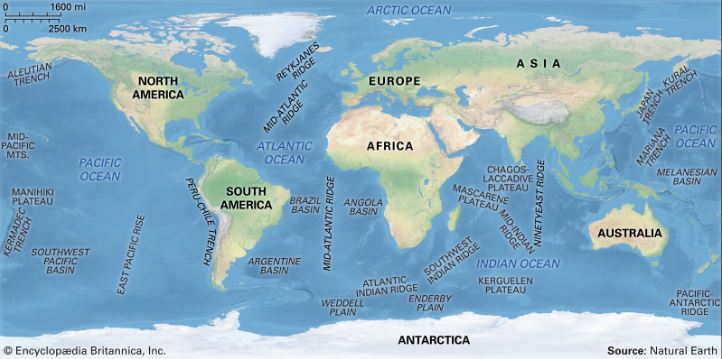
Where are the oceans? Photo courtesy of Encyclopedia Britannica.

For many of us who don’t live near the ocean, we may not pay too much attention to the rising sea level. But what if the beaches are shrinking as a result of the rising sea level, if coastal communities will be erased as submerged land expands, and if mass migration moves toward higher grounds. Can you image what sort of landscape will be? The impact of rising sea levels is no longer in future tense. This video from NASA has a better visual to understand sea level rise.

You probably have heard about the famous Italian city Venice slowly sinking. Last month, the “City of Canals” tested its long-delayed flood barriers. I happened to come across the report while I was doing a case study of the climate adaptation strategy in Virginia Beach, Virginia. Both cities are fighting climate change-induced sea level rises. It has become not uncommon that floods inundate coastal cities especially after torrential rain. The multi-billion-euro Mose scheme has an interesting name, both a reference to the biblical prophet Moses who parted the Red Sea and an acronym, “MOdulo Sperimentale Elettromeccanico” in Italian, for “Experimental Electromechanical Module.” The Mose scheme was designed in 1984 and experienced multiple delays due to corruption and cost overruns. It is expected to be fully completed by the end of 2021. If only by then the world will have reined in the covid pandemic and tourists may return to see in person its inauguration. This June the municipality in Virginia Beach approved the sea level rise plan that will cost $3.8 million in a six-year span. 

On the other side of the globe, China is bracing for extreme rainfall events and floods along the Yangtze River and its tributaries in South China. China paid a heavy price for the massive floods in 1998 that took nearly 4,000 lives, displaced millions and cost an estimated US$24 billion (in exchange rate for 1998) in economic loss. The disaster was considered the worst flood in China in over 44 years. It has since become a baseline for many regional, and even national, flood control public policies. As the country has implemented climate adaptation strategies including nature-based flood protection, the benefits are apparent in this year’s extreme flooding. Nature-based solutions, as the name suggests, is an approach that uses natural systems to provide critical services, such as green infrastructure in urban areas, wetlands for flood mitigation, and mangroves to reduce coastal erosion.

China’s “Sponge City Initiative” is a good example of adopting nature-based solutions. The concept of “sponge cities” was originated from Hyderabad, India and adopted by many Asian cities including Vinh, Vietnam and Shanghai, China—one of the most flood-prone cities in the world. Like a sponge that is full of small holes and can absorb a lot of liquid, Chinese sponge cities are introduced to permeable roads, rooftop gardens, rain gardens, green space and blue space such as ponds and lakes in urban city planning to retrofit existing infrastructure. At least 30 cities have signed on the initiative with more cities expected to join. China’s “Sponge City Initiative” has an ambitious goal: by 2020, 80% of urban areas should absorb and re-use at least 70% of rainwater. It is hard to gauge how effectively sponge cities are meeting this big hairy audacious goal, aka BHAG. Pingxiang, Jiangxi province, is one of the 30 sponge cities but this July the city was flood-ridden. This image from central government’s official website (click here) shows rescue workers treading the above-knee deep floodwater to evacuate residents.

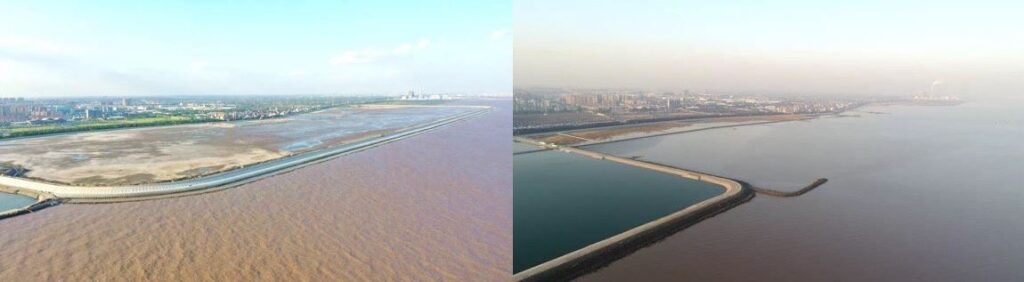
Another common strategies for managing sea level rise is to elevate coastal structures and build seawalls—the man-made solutions, such as Venice’s Mose scheme. Few Western media covered Shanghai’s gigantic seawalls that extend hundreds of kilometers. Land subsidence that happens in Venice, Virginia Beach, New Orleans, and Central Valley in California also happens in Shanghai. The “Paris of the East” has sunk on average about 8 millimeters annually since the mid-1970s. A combination of sea-level rise and land subsidence leads to shoreline retreat. So, beachgoers, cherish what you can have on your favorite beach and take as many photos as you can! Despite the warning from scientists about adverse effects of the seawall on coastal wetlands, within two-year’s time, Shanghai has constructed 520 kilometers (323 miles) of what the authorities called “the country’s first eco-friendly seawalls,” stretching across the Hangzhou Bay with massive mechanical gates to regulate overflowing rivers.

2017 vs 2019 before and after images of Shanghai’s gigantic seawalls.

Similar flood barriers are also seen in Virginia Beach’s Sea Level Wise adaptation strategy and Venice’s Mose scheme. The Shanghai version of coastal land reclamation looks similar to the Maasvlakte, a man-made extension of the Port of Rotterdam in the Netherlands. When it comes to success story of adaptation to sea level rise, go to the Dutch!

From Asia to Europe and Africa to the Americans, sea-level rise is inevitable. The world is flat, as Thomas Friedman puts it. And the world is also fragile as the World Wide Web is switching from information sharing with no boundaries to ideological and territorial ownership. The wall is built in the leaders’ heads faster than at sea to prevent coastal flooding. If we do not scale up mitigation efforts and prioritize climate adaptation in a concerted effort, the rising sea level in a flat world is gradually affecting billions of people regardless of their socioeconomic status. It is estimated many parts of coastal Asia might be submerged by 2050 if nothing is done to combat rising sea levels. In the field of sustainability and marine science, the Blue Carbon Initiative is a marvelous idea to deal with the carbon stored in coastal and marine ecosystems. We may not change the fact of shoreline retreat but we can do something to slow it down.

We are heading for an irreversible future—the impact of human activities is setting new records at a quicker pace, if not as competitive to new records of the covid infections. May 2020 was the hottest May ever recorded. July 2019 was the hottest July ever recorded. The hottest five years ever recorded were the past five years. We don’t need to live by the sea to understand the ocean as a solution to climate change-induced sea level rise. We don’t need to have a STEM-related educational background to report climate change—after all, we’re all witnesses of the history-making natural phenomena. We talk about weather every day! And if you are a seafood lover, you should be worried as our oceans are polluted by ubiquitous plastic. You might eating plastic as your oysters are mistaken microplastics for food. I’ll save this topic for the future. (Specifically, check back in two weeks.)

You Are Not Alone

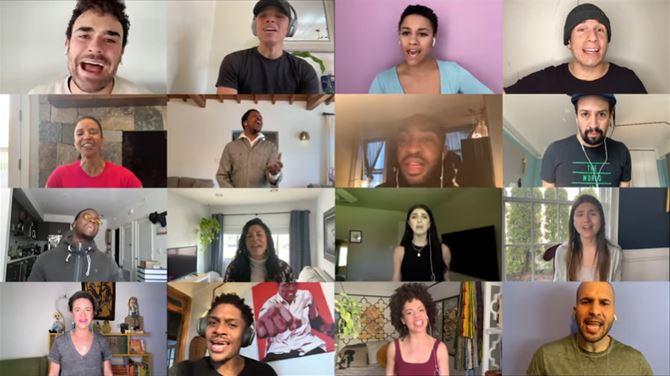
Screenshot of Hamilton Cast virtual singing.

I miss my moviegoing. The last time I watched a big screen movie was this February. I’d say this is the longest movie dry spell in my recollection. But I’m not alone. Tens of thousands of artists, musicians, writers, filmmakers, dancers, and professionals in the broadest sense of the arts, entertainment, and recreation sector are in the same struggle during the covid months. As the battle of the public health crisis is turning from a sprint to a marathon, we, the creative bunch, are stretching our brains in all directions. How can we present live performances at a safe distance?

This summer I was invited to a 6-year-old virtual birthday party. Out of curiosity, I accepted the invitation from the host. My linguistic sensors were drawn to some of the typical expressions in the invitation. The host wrote:

We hope you can join us for a virtual 6th birthday party for Maya from 10:30-11:00 on Saturday morning, June 20, 2020! No gifts necessary. During the Zoom call (link below), we will make a small volcano with playdoh, baking soda (1/4 cup) and white vinegar (1/4 cup), all in a safe basin or safe space. We invite you to make one, too. AFTER our call, from 11:30am-12noon, you are invited to a safe-distance, birthday parade past our house. Come by car, bike, scooter or on foot.

I was definitely a bench player but on observer status. But I enjoyed watching kids pouring white vinegar nonstop into the mouth of their playdoh volcanoes. Out came bubbling white lava. That was one of the safest volcano eruptions I’ve ever experienced. With a safe distance in mind, we may be inspired to attend more virtual concerts, live performances and even watch new release movies in a 2020-à-la-mode style.

We are not alone. It’s in our DNA to create, enlighten and entertain. Covid is somewhat an inspiration for creative professionals. Check out the music video of Living In A Ghost Town by the greatest rock band The Rolling Stones. What a fresh perspective to see soulless London through a glass ball! The lyrics are brilliantly current and resonant with all the lonely souls on the planet. 

How about a crossover? In creative writing, cross-genres allow fiction, nonfiction, poetry, screenwriting and many other forms of writing to come together in ensembles. In musicology, there’re studies about cross-cultural music adaptation from instruments to composition. In fine arts, modern/contemporary art is a testament to an eclectic mix of crossover ideas ranging from classic conventional methods to avant-garde mass media interpretation. In stage performance, that’s a wide, wild terrain. An actor is no longer limited to the stage. With the popularity of streaming entertainment, versatile actors can perform anywhere for musicals, movies, TV dramas and plays. A fundraising video produced by The Royal Ballet in the UK sends a heartwarming message to performing art lovers. You are not alone. We are all suffering the dry spell of entertainment.

Long time ago, I learned from a Maestro’s speech to an audience that there are three key elements of a good performance—the piece of music itself, the presentation, and the audience. He said, and I paraphrase his words, that we can’t change the piece of music as it was composed the way it was in its original form. But we can change how we present it. And the remaining third of a good performance comes from the audience. He said, eyeing the full house of audience, “Your response, whether you clap your hands, nod your head or stomp your feet, will contribute to a good performance.” I can’t agree more with the Maestro’s wisdom. As a writer, I cherish a reader’s response as much as a musician cherishes his audience’s response. Perhaps the “Zoom bomb” live performance of the Hamilton cast on John Krasinski’s SGN show can temporarily quench our thirst for live performance. It’s just fun to watch the facial expressions of the performers and the audience.

This July, we would have watched the 2020 Summer Olympics on TV if the pandemic had not forced a cancellation. A Fourth of July celebration without mass gatherings under the same sky of fireworks was an unforgettable memory of 2020. Adding to the memory of our 2020 are college graduates without proms and cap-throwing photography. We are indeed having a once-in-a-lifetime experience in 2020. If you are having a relatively quieter summer in the park, by the beach or in the woods, feel free to tell someone by verbal or nonverbal language at a safe distance that as much as it sounds like a cliché, we’re all in this together and you are not alone.


Let’s Talk About Trust (Part II)

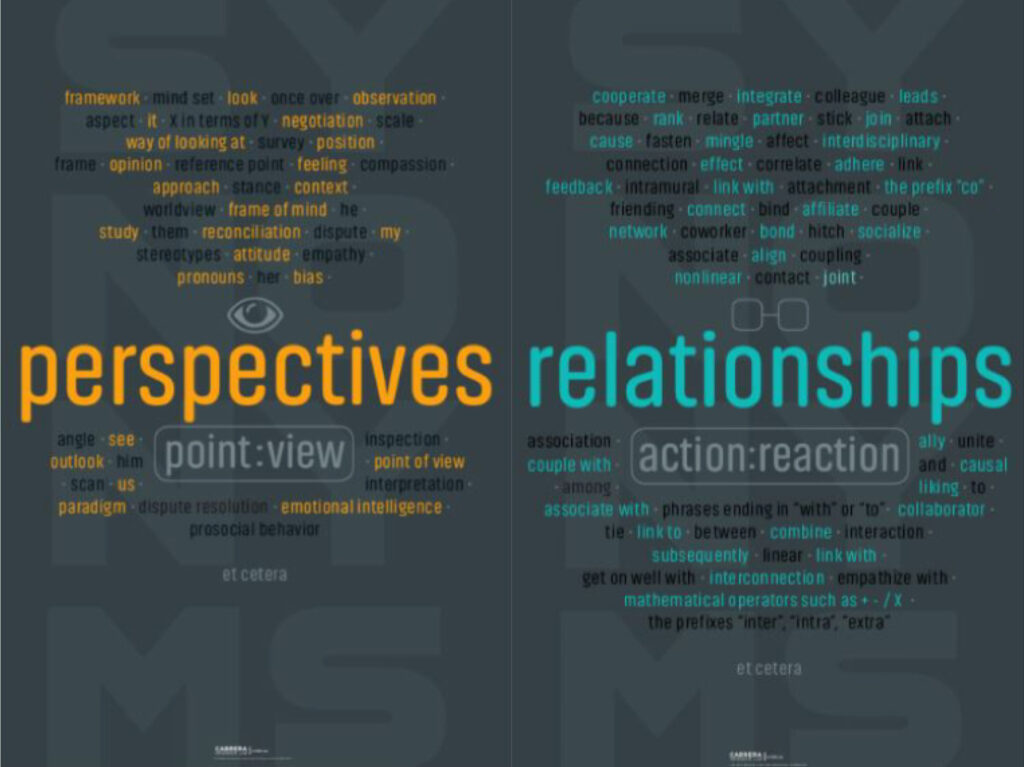
Image courtesy of Cabrera Research Lab. See the other twin image here.

If you ask any China Hand, you might get the same response: that mutual mistrust and distrust are commonplace in the bilateral relationship between the US and China. If you ask military hawks and diplomatic doves, their answers might also fall into the same rut. The ebb and flow of the level of strategic distrust between the two economic powers shed light on how much the leadership of both countries care about their mutual interests and shared history.

Put simply, under one party rule, China’s form of government is authoritarian. The characteristics of an authoritarian state are strong central power and limited political freedoms. This is contrarily different from the constitutional republic in the US where the chief executive and representatives are democratically elected by the people. Constitutional republics have a separation of powers. Checks and balances are applied in constitutional governments. If we apply systems thinking, China and the US have their own unique perspectives.

The distrust between both countries boils down to the distrust of the form of government of the other. Imagine if China were like the Philippines or even Taiwan, the US would not single out China as a rival. The US sees Taiwan and the Philippines sharing its core values. Chinese Foreign Minister Wang Yi implied recently at a press conference that foreign countries should not force China to change and that China does not intend to change other countries. Let’s face it. China’s form of government won’t change. That’s sad news. So it’s a waste of time of daydreaming that the ruling party would be in disarray amid criticism. It’s an act of sheer folly for the US to use China as a shield for its unpopular domestic and foreign policies.  

Rome wasn’t built in a day, neither is trust. How many trusted friends do we have? How long does a trusted friendship last? It took 235 years (as of 2020) for the US and the UK to maintain a trusted bilateral relationship. The relationship between the US and Russia has lasted 211 years but it has never been a trusted one. The demise of the US-Russia missile treaty has aroused distrust and suspicion. Looking back at history, the core purpose of the INF Treaty was to prevent nuclear war between the two countries and maintain peace in the post-Cold War era. When two countries lack trust and cooperation, it will lead to an arms race not only between the two countries, but also in other countries that see their national security threatened. According to a report by SIPRI, a Sweden-based research institute, global military expenditure rose to $1,917 billion in 2019, marking the largest annual increase in a decade. This is the price of geopolitical mistrust. The blatant affinity of the incumbent American ruler for Russia adds to the danger.

Because of freedom of movement and a long history of diplomatic relationships, American people are more familiar with Great Britain than China. Because of Cold War, American people may be more aware of Russia as a rival than China. Established in the era of the Communist leadership, the US-China diplomatic tie is only 41 years, much shorter than those with the UK and with Russia. Besides, liberal Chinese who fled to North America have shared their unreserved grievances about Communist China with American people. From literature to public demonstrations, anti-Communism sentiments are prevalent outside Communist China (as well as about North Korea, Laos, Vietnam and Cuba). This noise adds confusion to global trust in China, the world’s second largest economy. It is inevitable that Americans’ perception of China is limited to Communism and a hundred years prior, as if China had a blank history before the First Opium War (1840-1842). A few history buffs might know more about Imperial China. Ordinary Americans are as ignorant about Chinese emperors as ordinary Chinese are about US founding fathers.  

Without knowing the truth, it is hard to build trust. The modern day polarization in America speaks for itself. Our trust is built on reality to which our worldview is constantly justifying and adapting. The intellectuals can’t trust fake news because it can’t be justified by their knowledge. How can a patriotic American trust China whose form of government is contrary to the US? How can an American give a fair judgment of China if negativity about Communist China is all she learns from media and word of mouth? Likewise, according to Chinese party propaganda, the US represents capitalism and monopoly. How can a Chinese youth not be brainwashed with patriotism if he grows up with the party doctrine disapproving of US politics?

If the Planet were like a human, she would be bipolar, with the US and China at opposite ends. In the age of information overload and mercenary mindset, leaders neither look back at far-back events, nor do they look too far ahead. Forty-one years in history is nothing. Forty-one years in future planning could barely fit the midrange of time, if a hundred years is a full range in the power weaponry sense. If we do look back and look ahead with the vision of an eagle, and if we evaluate situation of self and of others as well, it will significantly increase our trust building. In systems thinking, these are perspectives and relationships.            

What surprises me this year is that while China is distinguishing itself from the US’s way of doing things, the US is doing things resembling China. I was appalled to see American history of 2020 unfolding like Chinese history under one party rule. Watching on the TV as Confederate monuments toppled one after another in response to the anti-racism movement, I was reminded of China’s Red Guards defacing churches and demolishing monuments deemed to represent the Four Olds, that is, old ideas, customs, culture and habits of mind. That was during the Cultural Revolution between 1966 and 1976. A significant number of historical artifacts and cultural heritage were destroyed during a decade of political upheaval. We should not destroy historical evidence, nor should we glorify a one-sided account of history. History is incomplete without the narrative of victims of a controversial historical event and ever-changing critical judgement of humanity. To err is human. Idolatry has no place in history.    

I was flabbergasted. On June 4, 2020, Lafayette Park in Washington DC was compared to Beijing’s Tiananmen Square. I saw on TV armed troops rushing into the nation’s capital to quell anti-racism protesters. The familiar scenes that took place throughout Hong Kong streets last year over a controversial extradition bill were repeated in DC. Pepper spray and rubber bullets were deployed as if protesters were the enemies of the ruler.

On the same day, the US Senate confirmed Michael Pack as the new head of the US Agency for Global Media, a federal agency overseeing broadcasters such as  Voice of America and alike. Soon after Mr. Pack took office, he fired all top dogs of the affiliated government-funded broadcasters. The scale of administrative reshuffle reminded me that what could happen only in China has happened in the US. Party loyalty, except for the few foreign contractors, is non-negotiable in news outlets such as CCTV or Xinhua News. In China, if officials don’t follow the party line, they are likely demoted or put behind bars for an alleged crime. In 2020, a strange phenomenon has taken place in the US—trustworthy public servants are forced out willy-nilly and distrustful officials become confidants of the ruler of the White House.

Anyone who knows some Chinese history can draw a parallel between current affairs in the US and painful Chinese historical events. How can we not to trust our own eyes in the face of tattering democracy eroded by authoritarianism?        

A relationship can’t last without trust. The US-China relationship needs more trust than distrust for global security, stability and sustainability. When two economic powers distrust one another, the world suffers; so does the Planet. The Paris Agreement on climate change aims to reduce global greenhouse gas (GHG) emissions in an effort to limit the global temperature increase in this century to 2 degrees Celsius. Had the US remained in the accord and worked together with China to achieve this goal, the two worlds of developed and developing countries would follow suit. Authoritarian countries may also follow China’s lead to reduce GHG emissions.

If China is an apple, the US is a pear. How can we convince ourselves that we eat an apple the same way as we eat a pear? They look different; their taste is different, too. If I tell you both an apple and a pear are good for your health because they are fruit, you can eat both. Without an apple, we won’t know that a pear looks different. Without a pear, we won’t know that an apple tastes differently either.               

Many a notable immigrant says the US is more than a country, it is an idea. I say it is an embodiment of ideological infrastructure. Why not start from rebuilding trust in our big and small relationships?

Let’s Talk About Trust (Part I)

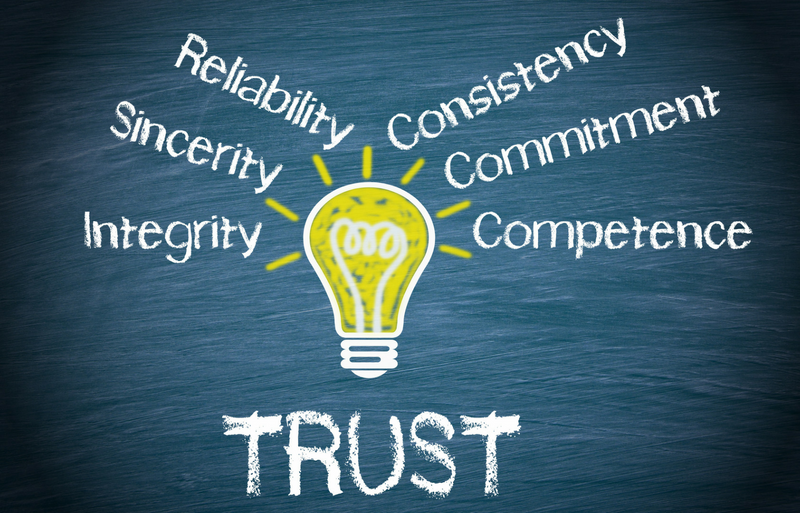
Photo courtesy of Scott County Foundation.

It takes time to build trust and it is nearly impossible to make amends in the aftermath of a trust crisis. Discussions surrounding trust crises about almost everything had been around before covid. Covid is a stress test of our interpersonal trust. From business to government, from kinship to friendship, we seem to ask ourselves more frequently these days—is it trustworthy?

Having been cooped up for some time to practice social distancing, I don’t wear a mask at home because I trust the living environment even though I don’t clean my house too often. I did not have spring cleaning this year. My trust is so high that I’m confident that there is no foreign pathogen in my house.

When I walk out of the house, jump into my car, I still have high percentage of trust in my surrounding—air is fresh and the car interior is odorless. Before I enter any building, I remember to wear my face mask as if it’s becoming my natural instinct. I’d like to maintain the safety of a public place as well as I feel an ounce safer for my precautionary measures. Inside a building, my trust of the surrounding declines.

In pre-pandemic days, I would be happy to meet family members or neighbors in person. They have my trust so we may even hug after a long separation. Today, I’d be hesitant to greet them outdoors. I can relate to the attributes of otaku (御宅族), a person who runs about a hobby alone endlessly and becoming social withdrawal from society. Covid has brought me more solitary moments and I’m doing pretty well with them. If I see people I know at a safe distance, I only can presume they are not carrying an infectious disease. However, when I see unknown neighbors from toddlers to elderly roaming the community as if covid is yesterday, a sense of insecurity chills down my spine.

As the Bard said, “Love all, trust a few, do wrong to none.” To maintain interpersonal relationships, we certainly should do our best to love as many as possible. Perhaps social distancing indirectly spurs virtual outreach and trust building. People whom we would not meet for months, if not years, or whom we may not rekindle connection resulting from a feud in the olden days, are now showing up on our screens of all sizes. For me, I came across a virtual musical performance that I would have missed in normal circumstances. Covid has brought us together more than separated us. Covid is also causing a heavy death toll. The number is still on the rise as if there is no limit until the number reaches the sky. Is the sky the limit? Small as our nation and big as the planet, wherever we are, everyone is in grief.

We overlook the power of grief. As do we to the power of trust.

During covid months, I cherish my otaku life with history. I learn and re-learn the historical trajectory of science and arts; I compare environmental, social and governance (ESG) criteria between companies with sustainability in mind. As a consumer, my trust increases when I read about Procter & Gamble Company’s Water Stewardship program in North America. Mastercard’s Priceless Planet Coalition to preserve the environment through planting trees has instilled a feeling of trust in tree huggers like me.     

History has taught us that without trust in business, a crisis like the Panic of 1873 can recur. According to some historical accounts, the Panic originated from Vienna, the capital of Austria-Hungary, spread to most of Europe and to North America by 1873. The biggest railroad bond speculator and banker, Jay Cooke, could not sell new bonds for his Northern Pacific Railroad. His banks borrowed from the depositors’ accounts to cover losses. When the North Pacific went bust, so did Cooke’s banking empire. A domino effect ensued in the finance and banking industries. The New York Stock Exchange shut down for the first time in response to the Panic.

In the face of a public health crisis with no end in sight, the performance of the stock market reflects investors’ trust for tomorrow. Under uninformed and misinformed leadership in America, we cast more doubt than trust when we speculate on the stocks’ futures. Do you believe the leaders when they say America is doing a good job of containing the virus whereas, in the meantime, Dr. Anthony Fauci warns of another spike if we don’t practise social distancing and wearing masks? Do you trust our government when they assure us that test kits are prevalent in every community whereas many of us either get shunned away at the test station because we don’t have symptoms, or we are told that the limited doses are rationed for the most needed, say, a pregnant woman.

Our public trust of government is unprecedentedly diminishing. The divisive leadership and unregulated online comments are to blame. The latter involve moral principles. Are there bottom lines for our societal moral principles? Should laws be above the human right of freedom of expression? If not, the trade-off is apparent. We have to willy-nilly accept the consequences of mistrust and distrust.

From Hong Kong to Singapore, many a democratic society adopts covid relief packages to revive a domestic economy. Under the enactment of the controversial national security law, Hong Kong is now perceived by the US and its allies as a Chinese city that is no different from Guangzhou or Shanghai in mainland China. Hong Kong’s nearly US$18 billion-worth covid relief package is composed of the Employment Support Scheme and other bailout and subsidy programs. The wage subsidy scheme aims to incentivize employers to retain existing staff rather than replacing them with new staff on lower wages. It shares similar spirits with the US’s stimulus package for small businesses, known as Paycheck Protection Program (PPP). It is government’s responsibility to maintain social stability and prosperity. Despite the fact that people in neither regions trust their governments, Hong Kong SAR has an upperhand of trying to gain public trust. Hong Kong officials led by the city’s head Carrie Lam have promised high transparency for the implementation of the wage subsidy scheme. Time will tell if the promise is met.

Nevertheless, in the US we are already seeing abuses of government assistant programs under the current administration. Big names, from Elaine Chao to Betsy  DeVos and from Jared Kushner to Sonny Perdue, are allegedly beneficiaries of PPP loans. These are not paychecks valued at hundreds of dollars, but they are taxpayers’ monies worth millions of dollars. History is rewritten as a result of the ruler of the White House peeling off government watchdogs. In order to buy trust from the ruler’s cronies, his government organ, the Small Business Administration waived ethics rules that otherwise would have screened eligibility of PPP applicants. Isn’t this contemporary definition of trading of trust? And yet the American small businesses which are the genuine covid victims, and which are eligible for PPP, are still waiting by the seemingly-never-get-through government hotline or a crashed website.   

Ironically, if we see Hong Kong as a Chinese city, isn’t Hong Kong ahead of the US when it comes to government transparency about the covid relief package? If a government has been giving too many empty promises and acting like the boy who cried wolf, how can it not be accused of doing wrong to all, a total opposite of the Bard’s “do wrong to none”?

Wuhan in Hot Water

Photo courtesy of DW

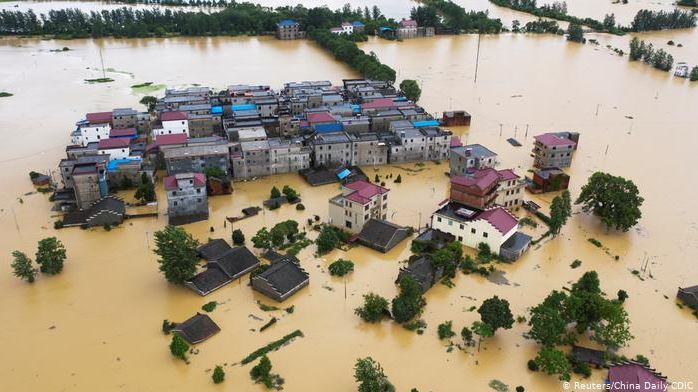
On the heels of the draconian citywide lockdown that lasted 76 days, Wuhan, the epicenter of the novel coronavirus, is facing another fatal disaster, heavy rainstorms and flooding. As the capital of Hubei province is slowly returning to normal—businesses reopening, students returning to school, and people embracing the hustle and bustle of the city, the central government has issued since early June flood alerts for 433 rivers, including 33 where water levels have broken historical records. For several weeks, torrential rain has continued to batter eastern, central and southern provinces, affecting at least 27 million people. Wuhan is no exception. Wuhan is in hot water.

Wuhan lies at the heart of Central China, divided by the Yangtze and Han rivers. As a result, Hubei province, where Wuhan is located, is severely affected. The Yangtze River region saw its second-highest day of rainfall in over 50 years, according to Chinese authorities. Such an extreme rainfall event is an example of climate change. Extreme weather patterns are unexpected, severe, unseasonal and regional. Unfortunately, there’s little connection to climate change in Chinese reporting on flooding. Climate change doesn’t respect borders. The rapid melting of the Himalayan glaciers due to climate change may also be a cause of more flooding in China. In fact, the neighboring countries of Southeast Asia countries should be concerned about climate change-induced flooding.

China underreports the cause of flooding partly to downplay its widespread construction of dams in the upstream of the Yangtze. Frankly, I am not a fan of dams after I learned about them from my sustainability graduate program. Dams cut off connections between rivers, lakes and floodplains, and reduce aquatic biodiversity. Hydroelectric dams are big methane emitters. Methane (CH4) is a greenhouse gas like carbon dioxide. After a dam is built, water can no longer travel where it used to flow. A huge amount of vegetable matter, such as plants, trees, leaves and twigs, is left in the dead water, rotting beneath the surface of the water. Rotting vegetation produces methane which is stored up in the mud. When the dam gate is open, the stored up methane is released suddenly in a huge volume like an erupting volcano. A study shows that rotting vegetation creates 25% more methane than previously thought in hydroelectric dams. Chinese leaders have a thing for hydroengineering. The mushrooming Chinese dams on the Mekong River are changing the ecosystems of the geopolitical region, leading to more far-reaching complications for the lower Mekong countries—Myanmar, Laos, Cambodia, Thailand and Vietnam for generations to come. Climate change will aggravate livelihood vulnerability in the Mekong region. China cannot self-isolate from climate change either.            

The 2020 deluge broke records—the water level in Poyang Lake, the largest freshwater lake in the country, is crossing the 22.5 meters or 74 feet mark, for the first time since 1998. While China is battling flooding and COVID-19, locust swarms are invading the vegetation in southwest China’s Yunnan province. The yellow-spined bamboo locusts were first discovered in late June crossing the Myanmar border. Myanmar agriculture authorities have warned about desert locust swarms that are wreaking havoc on crops in India and Pakistan. If we look back early this year, locusts swarms were seen in eastern Africa. They traveled and found food in India and Pakistan. Summer is locusts’ breeding season. According to the UN Locust Watch, these pests may breed in areas of recent rains on the Red Sea coast in Yemen and Saudi Arabia. Coupling with global warming, China’s current excessive rainfall could provide ideal breeding conditions for locusts. The exponential growth of pests will further exacerbate food insecurity and livelihoods.

In 2020, we witness communities ablaze in forest fires, crops destroyed by locusts, bridges and houses collapsed in floods, and human life lost in the battle of a novel zoonotic disease caused by a coronavirus. We often ask nations to do more about climate change. We might ask: what might climate change do to us? There is no option for any nation or individual to self-isolate from climate change. Wuhan is in hot water today; any city will be the next tomorrow.               

Retaliatory Spending Against Darwinian Fitness

A number of buzzwords have popped up in recent months as a result of the COVID outbreak. From housing economics to curbside service, coronavirus, or COVID-19—the word of 2020 by my selection—has created dozens of new words and expressions as fast as its viral mutations. As of late, researchers have found that the strains of novel coronavirus that have a mutated S “spike” protein are about 10 times more infectious than the original strain that is dubbed D614 in China. This may explain why COVID-19 is spreading so quickly in Europe and the US. There is plenty of evidence in America that infections are on the rise among young people. If this is not Darwinian fitness, what is?

Darwinian fitness teaches us that adaptation can increase the fitness level of organisms, making them better suited to survive. While we are adapting to our new normal by working and schooling from home, wearing masks in public and practicing social distancing, we are also increasing our chance of survival—a long-term freedom that short-sighted people can’t fathom. Our invisible enemy—the novel coronavirus—is also adapting to the new environment inside the human body by mutation. The mutated strain is more contagious, infections can be fully asymptomatic, and from children to working age young adults, no age group is exempt from infections. The strains that survive are the fittest, if not the strongest.        

Chinese people do not defy science the way some American diehards do. In a country that emphasizes more on collective wellbeing than individual free will, Chinese people followed official guidelines to stay at home and wear masks in public in the first quarter of the year. Shops and factories were closed. Restaurants canceled all dine-in services and touted for business via online ordering and home delivery. As the infections were under control and the pre-pandemic business-as-usual slowly resumed, the pent-up Chinese people were willing to splurge when lockdown came to an end. That was how the buzzword—retaliatory spending—came into being in the Chinese netsphere.

Like US local governments, Chinese local governments did not want to miss the national holiday as it is always the best time for the economy. In the US, some local governments cannot wait to reopen the economy at the outset of a partial lockdown. They aimed to reopen the economy no later than Memorial Day. So I see retaliatory spending happen both in China and in the US. I take the May Day holiday in China and Memorial Day in the US as their turning points.

Retaliatory spending is a vivid description of a consumer’s psychological behavior. If you fast for days, when you see food, you’d have a ravenous appetite. If you are unable to take a shower for weeks, when you see a bathhouse, you’d be most likely dive in and soak yourself for as long as you please. When lockdown is lifted, house-bound citizens are dying for outdoor activities to make up for reduced spending during the lockdown.

During China’s May Day holiday, the major tourist sites welcomed 50 million trips within the country in only two days during the five-day break. Strong holiday sales in China were boosted by coupons from brick-and-mortar stores and e-commerce. Retaliatory spending took place mostly locally, reflecting a consumer poll in which nearly 90 percent of respondents rated dining out, shopping, and going to movies on top of their wish list in the aftermath of a lockdown. The Chinese media compared the domestic market to a belated spring warming up from a frigid winter. I thank big data and retaliatory spending for this economic recovery.

In the US, I also thank retaliatory spending, but short-sighted leadership has a lot to do with the recovery of domestic economy. As soon as the economy was reopening, American people flocked to restaurants, bars, beaches and parks. The Memorial Day holiday weekend spurred the incentives for retaliatory spending. However, I’d like to argue that some self-centered Americans have defied both science and history. Not only do they refuse to wear masks in public, they have not complied with shelter-in-place for more than 40 days. History has taught us that it was a norm centuries ago when ancient civilization in Italy required keeping ships from plague-stricken countries waiting off its port for 40 days to assure that no latent cases were abroad. Thus, the English word “quarantine” originated from “quarantena” in Italian, meaning “forty days.” The US not only did not enforce a nationwide implementation of social distancing and testing its citizens, the sporadic shelter-in-place equivalent to self-quarantine lasted less than 40 days as a result of divisive leadership. If young American workers are unfortunately hospitalized for covid, who will support our retaliatory spending in the US?

Yes, the US economy is recovering. Retail sales in America surged in May by 17.7% over April, more than double that amount that had been expected. The seemingly optimistic Wall Street stock market is rising and so is the U.S. death toll and infection cases of COVID-19. We will definitely have a long frigid winter ahead in terms of our freedom of movement. I’d better get used to curbside service now. It was a new experience for me when I ordered a pizza from a socially responsible merchant a few weeks ago. The entire process from ordering my pizza, waiting, and picking up my order was outside the pizzeria. I was on the sidewalk the whole time. Peeking through the window, I felt weird to see an empty, dark restaurant and only two people working behind the counter. While I was waiting for my pizza outside the store, I roamed around the strip mall. What used to be busy storefronts were still shut and sidewalk was empty. My favorite Korean restaurant was closed but it was getting ready for reopening. A digital touch screen monitor was installed outside for customers to order food. I wonder if this new addition to the business would outlast the pandemic.   

My first curbside ordering experience.

My trip to the local library was also a new experience. The curbside pickup is ingenious. I had to arrive at a designated parking zone on a specific day according to the library’s so-called “staggering system.” Customers are divided into three groups based on their last name in alphabetical order. Each group may come to the library on a specific day of the week. Customers will phone in the library to report their arrival at the lot and wait for a call back from the librarian after their books are ready for pick up. Two big tables are numbered at the entrance of the door-closed library. Books are placed on the assigned table when a customer is notified for pick up. Voilà! This is curbside pickup in 2020.   

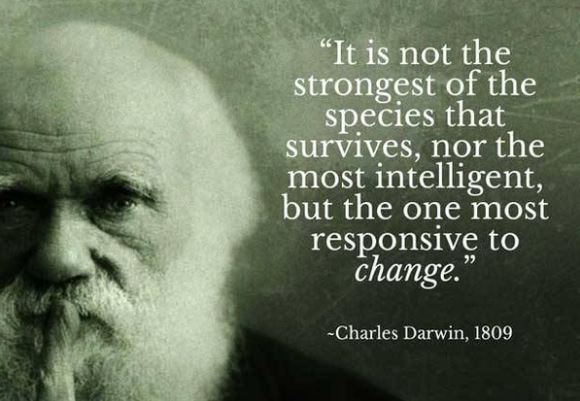
From grocers to restaurateurs, more and more socially responsible merchants are offering curbside service. Social distancing, curbside service, mask wearing are proven to humanity that retaliatory spending with Darwinian Fitness in mind is possible. As Charles Darwin put it succinctly: “It is not the strongest of the species that survives, nor the most intelligent, but the one most responsive to change.”

Household spending in Chinese character.