Back to Basics

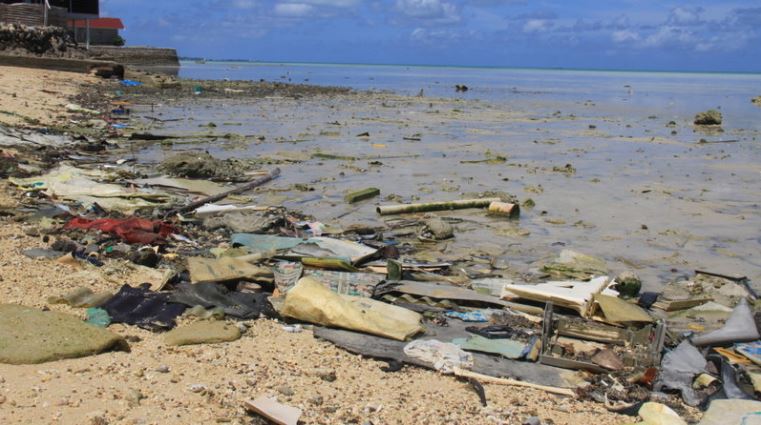
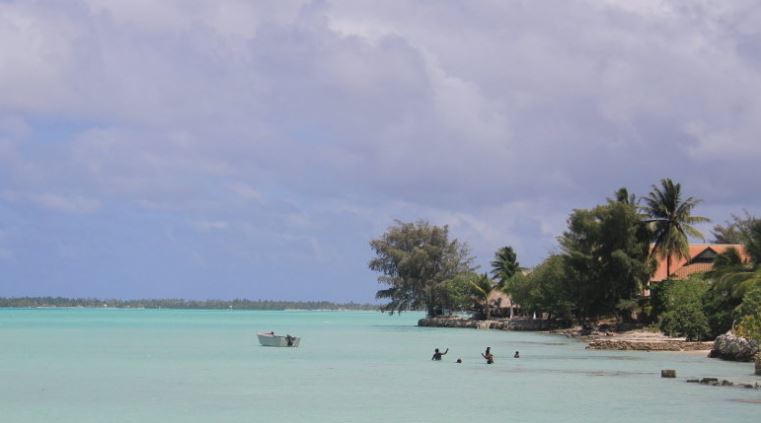
Solid wastes are strewn in South Tarawa’s lagoon in low tides.

What are the basic needs of a person to survive? How many days can a person survive without food? How many days can a person survive without water? During my covid months, I constantly associate these questions with my sustainability case studies of South Africa, Laos, the Sundarbans in India and Bangladesh, e-waste trade, and now, Kiribati. My conclusion is for the low-rung population around the world, people strive for food, water and shelter every single day, presumably they’re all clothed and civilized. Economic migration is closely tied to our basic needs. Aren’t we who live in developed countries also making our days count to meet our basic needs in covid-afflicted 2020?

With global warming in sight, Kiribati is among the world’s first countries that will disappear under the sea in this century. The country that falls into all four hemispheres—northern, southern, eastern, and western—is also a destination for mankind to witness the fragility of life without water, food, shelter, and telecommunication. According to the World Bank, despite the rising number of telephone connections, Kiribati is one of the least “connected” countries in the world. Out of the 33 coral atolls, only 21 islands are inhabited. And yet, the majority of the population either has no access to information communication technologies (ICT) or unable to afford the service, which is often unreliable. Wouldn’t isolated Kiribati be an ideal place where a message in a bottle could be washed ashore?

Connectivity enables us to understand the world and communicate with our own species. Without the Internet, I doubt big countries can function with pride and prejudice in 2020. In Small Island Developing States like Kiribati, unless you’re holding high office like former President Anote Tong, you won’t be able to travel around the world to campaign for global climate action and leadership. People in Kiribati are innate optimists and their worldview is not shaped by social media nor science. Their livelihoods are not dependent on the Internet of things (IoT). Their simple lifestyle boils down to the simple basic survival activities of eat, drink, poop, pray, sleep and trade. You may call this pattern “a short-term, self-rescue system.” 

Humans are short-sighted animals. In the world of connectivity where people are fed with overloaded data, we become less patient and prudent. Instead, we are more judgmental and siloed. As the Bard quipped: “We suffer a lot the few things we lack and we enjoy too little the many things we have.” In the days of Benjamin Franklin where there were no telephones or the Internet, leaders made plans so far-reaching that immortals today can still see their legacies influencing our life. Colonial legislation is one example. Nevertheless, we have everything and we don’t seem to find a fungible solution that will sustain our life without worrying about food, water, safety, and in Kiribati’s case, land too. With good healthcare, people can now live as long as 100 years (it’s less fortunate for I-Kiribati whose average life expectancy is 68 years in 2018). Our sustainable development plans often set in 2050 and 2100. What will happen after 2050? 2100? Our lifetime won’t reach that far, but does that mean we are okay to leave our problems to future generations to solve? Are we solving our forebearers’ problems now? 
South Tawana’s lagoon in high tides. Image courtesy of NPR.

If we put aside climate change, what threatens I-Kiribati’s survival is truly water and sanitation. That explains why Scientific American crafted this alarming title in a 2015 article: “Kiribati’s Dilemma: Before We Drown We May Die of Thirst.” Water, water, everywhere, nor any drop to drink. I found these three facts about my back-to-basics questions in the beginning of this piece: Humans need food and water to survive. At least 60 percent of the adult body is made of water. A human can go without food for about three weeks. It would typically only last three to four days without water.

Where can you get fresh water in Kiribati? Glaciers, lakes, reservoirs, ponds, rivers, streams and wetlands—these geological features are either non-existent or inaccessible in Kiribati. Groundwater is the main water source. However, overcrowding in South Tarawa has snowballed the pre-existing condition of water scarcity and poor sanitation, accelerating the vicious cycle of poverty, or in economics, a poverty trap. According to the World Bank, the population of South Tarawa grew from 3,013 in 1931 pre-independence to over 40,311 by 2005. The density in Betio (pronounced Beh-so), one of Tarawa’s neighborhoods, is comparable by an NPR reporter to Hong Kong whose high-rise housing is at exorbitant prices.

Access to safe water and basic sanitation are human rights. Water issues in Kiribati are acute with or without the lens of climate impact. Metals and chemicals from mining activities and agricultural chemicals have polluted Kiribati’s coastal waters. The lagoon of the South Tarawa atoll has been heavily polluted by solid waste disposal. No tourists and few residents would concern about New York City’s underground sewage system. Out of sight, out of mind. Such aged but functional urban sewage system in NYC is a dream in Kiribati. If you care about quality of life, diversity, and changing other people’s life, water issues are the first and foremost threats to survival in Kiribati. The lagoon in low tides reveals the true color of this remote island nation.       

The poverty trap can be broken but it requires immediate action and long-term planning. Education and healthcare will provide foundation for any underprivileged global citizens to survive and even solve their epidemic problems. An old saying goes, you don’t give them fish, you teach them how to fish. Water is a lever. Like covid, diseases can wipe out a population too. Leprosy is one of the waterborne diseases that are caused by pathogenic micro-organisms that are transmitted in water. And Kiribati is one of the few countries in the world that still has leprosy.

Rising sea levels not only damage forests and agricultural areas but also contaminated fresh water supplies with salt water. Rising global temperatures increase drought periods. Just imagine, how to survive on a desert where there’s neither rainfall nor clean groundwater?        

If Hong Kong were drowning due to rising sea levels like Kiribati, Hong Kongers could migrate to mainland China or elsewhere where democracy lies. Kiribati has no “motherland” to fall back on as it is drowning. The truth in 2020 is Kiribati is a sinking land with an increased population for limited fresh water reserves. Is this the basic brutality of Darwinian survival for the fittest? Stay tuned for the last post of the series about Kiribati’s climate adaptation.

The Migraine of Migration

Image courtesy of the Guardian (click here for more).

Migraine is a painful nuisance. You don’t know when it will act up, nor do you have control of its duration before it dissipates. The recurrent throbbing headache drains your brain power and at times paralyzes your sensibility. If you’re a patient with migraine, I bet you will do all you can to prevent and reduce its chances to recur, no? What about a migraine that entails humanitarian action? Many countries and local communities consider immigrants as a group of job-seizing-and-welfare-siphoning raiders. Whether immigrants come from legal or illegal channels, they often begin their pursuit of happiness in a newfoundland against discrimination.

In Kiribati, a remote island country in equatorial Pacific, migration of I-Kiribati, as its people call themselves, has taken place as a result of rising sea levels. Half of the country’s population of 111,000 people lives in South Tarawa, the capital and hub of Kiribati. The rapidly growing urban area is less than 9.8 feet (3 meters) above sea level, and yet Tarawa has an extremely high population density. Generally, the reasons for people to relocate can be divided into economic migration or non-economic migration such as political asylum, war and drought. Kiribati certainly fits the bill for both.

Kiribati is recognized as a Least Developed Country (LDC) and is ranked 170th of 186 countries on per capita GDP, according to an official paper. The economy is highly dependent on fishing licensing fees, remittances and donor assistance. The phosphate rock mining until 1979 has accumulated a large reserve fund with growing interest to government revenue. But still, with an increased population and rapid urbanization that are commonly seen in many other developing countries as well (except China’s aging population), Kiribati has to deal with an alarmingly high rates of unemployment and infant mortality resulting from insufficient healthcare.

If there’s no job in the home country, it’s natural for youths to seek opportunities abroad. Well, global warming aggravates this outgoing labor force. The sandy, tropical islands have few natural resources including water and are prone to drought. Joshua Keating, author of Invisible Countries, poses a poignant question: “Countries cannot be destroyed; they can only become other countries, the land they occupy now controlled by someone else. But what if there is no more land?”

As glaciers melt at an unprecedented speed, warm seawater and overfishing are bleaching coral reefs, further damaging the food chain as high up as humans’. Where do you think our favorite seafood comes from? The land erosion has driven I-Kiribati to move to higher ground or even relocate abroad. The term “climate refugees” is derived from a headline-making lawsuit surrounding I-Kiribati Ioane Teitiota. Long story short. Mr. Teitiota brought a case against the government of New Zealand at the UN Human Rights Committee (HRC) in February 2016 after authorities denied his claim of asylum as a “climate refugee.” He was deported from New Zealand to Kiribati six months before. Early this January in its first ruling on climate change-related asylum seeking, the HRC stated that countries may not deport individuals who face climate change-induced conditions that violate the right to life. The landmark decision surely sets a global precedent. To the developed countries, an influx of climate refugees reaching ashore to enter their boundaries of sovereignty is akin to a migraine, especially to those xenophobic leaders and citizenry. You don’t know when the aliens will come to you and how long will they stay in your country. You have to deal with this humanitarian migraine, as you are the last resort of homeless climate refugees who exert their rights to seek and enjoy in other countries asylum from persecution. In this case, the inhabitable condition of home countries is a persecution.         

This is the beginning of an end of climate diplomacy in this century.

The roadmap to a better future for climate refugees in the Pacific.

Kiribati is only an epitome of the international and internal migration that is confronted by low-lying countries and coastal communities around the world. Because the tropical country is only at Michael Jordan’s height above sea level, it is prone to be one of the first countries that will be wiped out off the world map as a result of rising sea levels and land erosion. After all, Kiribati is so small that you can barely see it on the map. Until you zoom in will you find a string of dots.

It is a known fact that climate change displaces wildlife and humans. When Hurricane Katrina hit Louisiana, tens of thousands of people had to be evacuated and relocated, some even resettled elsewhere permanently. As the planet warms, species are shifting where, when, and how they thrive. According to the National Geographic citing a federal study, half of all species are on the move. Fishery communities will be hard hit as they depend on certain kind of marine commodities for livelihoods. Kiribati may have a shrinking land but it has one of the world’s largest maritime Exclusive Economic Zone (EEZ). However, bathed in the cruelty of global warming and marine pollution, schools of fish including tuna—Kiribati’s largest economic resource—may have swum on migration toward cooler waters or die together with the bleaching coral reef. That’s a migraine to the fishing industry.    

To Pacific islanders, being labeled as “climate refugees” connotes a stigma equivalent to being second-class citizens. During Anote Tong’s presidency (2003-2016), the government launched the “migration with dignity” policy to allow I-Kiribati to apply for jobs on offer in neighboring countries such as New Zealand. Educated young I-Kiribati seem to be more receptive to the policy than their parents or grandparents who would rather live and die where they were born. Researchers shed light on one projection that a 19.7-inch (50 centimeter) rise in sea level could displace 1.2 million people from low-lying islands in the Caribbean Sea and the Indian and Pacific oceans. That number almost doubles if the sea level rises by 2 meters, approximately Michael Jordan’s height. When ethnic groups are disbanded and displaced, their culture including languages is susceptible to assimilation with new culture or gradually lost over generations. If this is not a migraine-turn-terminal-illness in linguistics, what is?       

Make no mistake. The migraine of migration could lead to far-reaching implications. As I randomly find an image of Kiribati on the internet, seeing a long strip of beige land covered with dense palm trees, shades of turquoise and gray in fluidity hugging the contour of land, I thought to myself what if rising sea level has already threatening Kiribati’s drinking water supplies. Stay tuned for the next post on water and sanitation.             

The Elephant Room

Image courtesy of Lauron.

There are two more months left before we leave 2020 behind. Like many of us, we have so much undone, so much to grieve over, and so much to hope for a change. Since early February, there has been a popular opinion among the intellectuals to compare climate change with covid in terms of its scale and scope of damage and destruction to humanity. Both climate change and covid are the elephants in the room in 2020 and beyond. Yes, two elephants!  

The pandemic has ruined our plans—travel, international cooperation, the summer Olympics, religious assembly, concerts, graduation, wedding, honeymoon, and even funerals, we have to scratch them off or prepare them with safety measures in a lens of covid. We know what the problem is and what a nuisance the problem is, and yet we run out of resources to tackle it. Nor do our leaders see eye to eye with the suffering, silent majority. This covid elephant is trampling our lives. How preposterous it is that liberal countries cannot rein the beast while authoritarian states are manipulating data about the beast! What’s worse, the United States has let it loose in the room. We’ll be with the elephant (and its relatives, too) for a good part of next year, too. Welcome to the elephant room.

In light of two more months left in my year of advocacy for endangered species and languages, I’m supposed to share with you my comparative study of e-waste recycling between the U.S. and China. But I’m having an embargo of releasing my yet-to-be-published essay as I’m still awaiting a response from the Economist. I doubt the newspaper will pay attention to this small potato. After all, the newspaper is one of the few wise elephants in journalism. I’ll give a couple more weeks for my message-in-a-bottle application to float ashore as my hope dwindles.  

Here is the plan. (Sound familiar with this mantra?) I am going to focus on my virtual tour of Kiribati this month. And I will conclude my 2020 year of magical thinking about e-waste recycling, linguistics and other topics in December. I’m not sure where I will be in 2021, and what sort of destiny for this column lies. I do know that if I survive 2020, I’ll have had the longest confinement within 15-miles radius from my home. My fruit for thoughts and for tummy is declining and my reverie grows stronger in my pent-up frustrations. Fiction is my vaccine now. One of my villain character studies is the 45th President of the United States. (Have I told you my first caricature attempt taught by KAL, a renowned cartoonist from the Economist, that brought me long-awaited laughs is my villain object of study?) Virginia Woolf once said, “A woman must have money and a room of her own if she is to write fiction.” I have only one—the room.

This October I’m thrilled to learn that an international treaty banning nuclear weapons has been ratified after the United Nations gathered 50 signatories from member states. Together with, Nigeria, Tuvalu, South Africa, Vietnam, New Zealand, the Vatican among others, Honduras became the 50th country to ratify. None of the five permanent members (all nuclear weapon holders)—China, France, Russia, the U.K. and the U.S.—have ratified the nuclear weapon ban. If my villain object of study has unified tens of millions of early voters domestically, he certainly has reinforced the opposition sentiments of these five elephants in the UN to a peacemaking nuclear weapon ban.                     

This is only the beginning of an end of 2020.

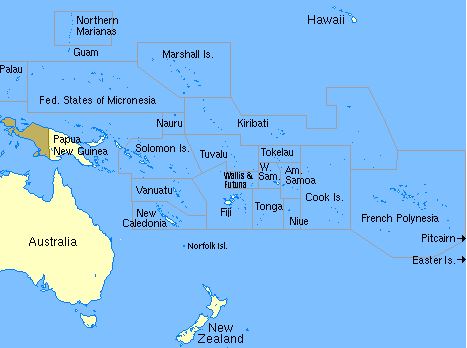
Kiribati (pronounced Ki-ri-bahss), a former British protectorate in the equatorial Pacific, won independence in 1979 and joined the UN in 1999. Since then, the island state composed of 33 coral atolls, with the distance from the easternmost to the westernmost island equal that between New York and Los Angeles, has been an active participant in international efforts to combat climate change.

Geologically, Kiribati is a low-lying country of which many atolls are rising just 6.6 feet—as tall as Michael Jordan—above sea level. The highest point is Banaba, a controversial island, which reaches 285 feet—as high as a thirty-story building, give or take—above sea level. Unfortunately, Banaba is now sparsely inhabited as a result of overexploitation of its rich phosphate by British colonists and locals. The phosphate mining (for fertilizer) had been a major revenue for the island nation and yet the environmental damage has forced out Banabans to resettle in northern Fiji. So historically, the I-Kiribati, a name that Kiribati’s indigenous residents give themselves, have been victims of environmentally-induced migration and displacement. Socially, except for the few outliers such as former president of Kiribati Anote Tong who is dubbed “climate warrior,” I-Kiribati by and large identify themselves by clans and families and religion. They look for Noah’s Ark more than praising President Tong’s climate leadership. Doesn’t it draw a parallel to the climate deniers in the coal country United States?

Kiribati is a perfect place for us to learn and relearn the trees of life against the backdrop of the climate elephant in the room. And in 2020, joining with the covid elephant, we have two elephants in the room. Welcome aboard! Stay tuned for the next post.

Pacific islands in context.

China Speed

China Speed in Chinese character with pinyin. Image courtesy of Chinaabout.net

Linguists might call “China Speed” Chinglish, that is, a blend of Chinese and English incorporating some Chinese vocabulary or constructions. “Chinese speed” is more grammatically correct, and if you say “zhōngguó  sùdù” in Chinese, you will get a praise from Chinese speakers for its originality. The phrase “China speed” is often used in Chinese media and by Chinese officials. It implies that Chinese people deliver results collectively at a remarkable speed, showcasing the efficiency and decisiveness of leadership.  

Chinese people are proud of their China speed. As the world is watching China’s global influence grow, more of Chinglish like “China speed” will be introduced to the world. China is now on the path of sustainable development which is a forerunner to cutting greenhouse gas emissions. If China’s sustainable development sees positive results, and if the United States continues to withdraw from global leadership, China is expected to become a successful case study for many nations. Perhaps we will see more Chinglish during international experience sharing. We cannot learn the Chinese language at China speed, but we may learn about China with a glimpse of China’s achievement that was obtained at China speed.

Under one-party rule, leaders execute China speed much easier than in a multi-party government. China needs direct foreign investment to eradicate poverty and improve quality of life. So the economic reform kicked off forty years ago. To the Western media’s disappointment, Chinese people have more praise than grievances about the Communist leadership’s decision since 1978 to promote state-controlled capitalism. “The blistering pace of expansion” by China’s economic reform has impressed Chinese people and the world as “China speed.”

Chinese politicians like to link “China speed” to their resolution to deliver grand plans. Indeed, where else can we see a government like China’s that orchestrates collective efforts and builds in merely six days on an around-the-clock work schedule two Fangcang shelter hospitals in Wuhan, once the epicenter of the covid pandemic? Indeed, there is only one large Communist-ruled country with 1.4 billion people on the planet. It gives so much material for Democratic states to criticize. The faster China grows, the faster criticism comes at China. I call it the “China speed spillover effect.”

2020 marks the 40th anniversary of the establishment of three special economic zones (SEZ) in Guangdong province, China’s economic powerhouse and manufacturing hub. The most well-known one is Shenzhen which was transformed from a fishing village to a thriving metropolis within one generation. From 1979 to 2019, Shenzhen’s GDP rose at an annual growth rate of 21.6 percent to 2.69 trillion yuan (US$ 389 billion equivalent). With its per capita GDP skyrocketing from 606 yuan to 203,489 yuan, Shenzhen ranks as the third most expensive Chinese city in 2018, following Hong Kong and Shanghai. Adjacent to Hong Kong, Shenzhen has become the “Silicon Valley of China” with the world’s biggest tech companies and China’s second busiest port.

The other two SEZ in Guangdong are Zhuhai and Shantou. Together with Xiamen in neighboring Fujian province, the first four SEZ were created in 1980. About the same time, China enacted the draconian “One Child” policy that bestowed upon the generation of only children, including me, another moniker—the generation of post-economic reform. China Speed does not care about who you are but what you do for a collective outcome, for a team project with a shared goal. I grew up with China Speed and I witnessed how China Speed had changed China’s landscape and people’s livelihood. If you don’t like fast-paced lifestyle, China is not a place for you to reside. In 2020, the SEZ have grown with confidence and pride whereas I have long been forced out of my beloved Guangzhou, the capital city of Guangdong, due to its unaffordable housing. Living outside China, my learning of my birth country has not been reduced or stopped. Quite the opposite. The Western world talks more about China than its own domestic problems. The United States’ foreign policy has long targeted China as an opponent. China is the U.S. scapegoat for mishandling COVID-19. China is a business opportunity for the post-Brexit-with-no-deal U.K. to cling to. China’s Belt and Road Initiative (BRI) has freaked out democratic states opposing China’s geopolitical dominance. China’s cross-strait stance toward Taiwan and the Hong Kong national security law add fuel to an ideological war abroad between the pro-China camp and its opponents. China’s rapid change outpaces my writing about the country. My writing falls behind China speed.

The escalation of China-US tech war further accelerates China speed in technological development. With determination and perseverance, Chinese surveyors reached the summit of Mount Everest this May to remeasure its height. According to China’s measurement, the height of the world’s tallest peak is 8844.43 meters which is four meters less than Nepal’s calculations. If this achievement was completed by the U.S. or Canada or any allied countries, the world would have celebrated the result. But the expedition was made by the Chinese at China speed—roughly a week’s time. The world cast doubt and even amped up the “China threat” rhetoric. I note that when one is political, everything she sees is in the lens of politics. As a result, everything could be politicized. When one is racially biased, everything she sees is in the lens of racism. As a result, she stands on either polarity—whether she has the innate privilege or she is treated unfairly due to racial discrimination.

As I continue to marvel at China speed which is astonishingly fast and remarkably in sync, I worry about the US-China relationship. In one way or another, both countries need to work out a co-existent solution in the ever technologically-integrated world. Despite Chinese businesses chasing profit and efficiency like those in the U.S., a healthy mechanism of quality control is greatly needed among China Inc. China speed in business does not necessarily boost the image of Chinese shoddy goods. There is still room for China to maintain speed and quality. In the IT sector, the chips to smartphones are like a brain to human. China speed explains why it is so hard for ARM, a British company responsible for the architecture of majority of mobile processors today, or metaphorically, the rulebook for the brain of smartphones, to compete with Chinese phone makers. The breakneck pace of change and innovation in China’s mobile market at China speed sustains the cash flow of research and development in tech companies. The typical time to go from the raw design to a full retail product is at least a year but Huawei chopped a full third off the turnaround time. Chinese consumers upgrade their smartphones at a pace almost like changing socks. My personal experience is my Chinese phone is always outdated when I revisit the country.

Whether it is China speed or American speed, let us hope the story of The Tortoise and the Hare will shed light on the truth that success requires effort. The world’s two biggest economies should run toward the finishing line of a shared goal together. Stronger together. 

Water Water Everywhere

United Nations Sustainable Development Goal 6

If my dictionary is correct, the speaker who owned this famous line: “Water, water, everywhere, nor any drop to drink” was a sailor in English poet Samuel Taylor Coleridge’s work, The Rime of the Ancient Mariner. The sailor was on a stranded vessel surrounded by salt water that he could not drink. Water is necessary for our survival. Access to clean water and sanitation is a human right. Among the United Nations’ 17 sustainable development goals (SDGs), SDG 6 is to ensure access to water and sanitation for all. Have many Americans, who access water directly from faucets and bottles without a second thought, thought of those who may be like that sailor as water scarcity becomes more critical?

In contrast with the fact that countries focus heavily on energy for development strategies, especially investment in clean energy, water is less regarded as a national security issue. As we are still living in a fossil fuel-based economy, we will consume more water to generate power in order to meet the growing energy demand. Even wastewater treatment plants need energy to pump water, and the energy in water can be used to produce electricity. Researchers found the U.S. energy system requires an estimated 58 trillion gallons of water withdrawals each year. Of that, 3.5 trillion gallons of freshwater is consumed. In other words, when we discuss energy, we need to factor in water. Water, water, everywhere, nor any drop to power.

Water is used by some water-rich countries as a political weapon. Or in China’s case, a political decision that few people dared to confront has diverted water from water-rich southern provinces to parched northern regions as part of a massive South-North water diversion project. The water diversion project has implications for regional ecosystems similar to those of the Three Gorges Dam on the Yangtze River. Using water as a political weapon is not a new idea but it has become more widespread as global water supplies are decreasing. Turkey takes advantage of hydropower as a political weapon against the Kurds. The Tigris and Euphrates rivers, two of the three longest rivers in the Middle East after the Nile, both originate in Turkey, making the country a hydropower state following the completion of a massive dam project last July. Now, climate change has aggravated drought condition in the region, drying up the ancient rivers. Turkey’s dams have significantly reduced water flow into the lowlands of Syria, where the Kurds are settled.

Syria’s political upheaval has a lot to do with water as well. Researchers found an extreme drought in Syria between 2006 and 2009 was most likely due to climate change. Where there is drought, there is a food crisis. Aridity in the Eastern Mediterranean caused crop failures that led to the migration of at least a million people from rural to urban areas. This added to social stresses that later turned into the shocking Syrian civil war against President Bashar al-Assad in March 2011. Water, water, everywhere, nor any drop to irrigate.          

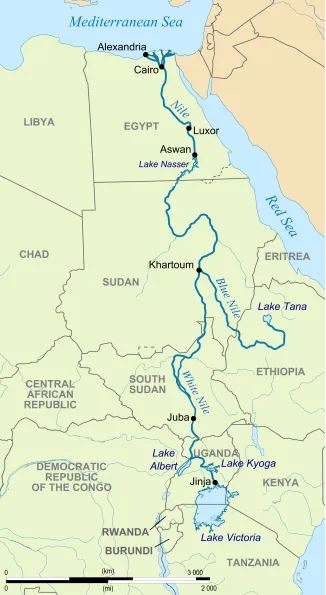
Many geopolitical conflicts are derived from water. From the Mekong River dams in Southeast Asia and China to the Grand Ethiopian Renaissance Dam (GERD) in Africa, conflicts over water access abound. Water scarcity becomes a threat to ordinary people’s livelihood as well as to the power of ruling parties or strongman leaders. Egypt has publicly denounced the hydroelectric GERD and its impact on access to the Nile’s waters as a major threat to the country’s water security. Thanks to Chinese banks, the Ethiopian government was able to raise money needed to start the construction of the GERD. More disputes about the GERD are expected to erupt in the region.

Courtesy of International Water Law Project Blog

China is dealing with water conservation by exploring and adopting new technologies such as precision agriculture, drones, satellites, big data, machine learning, and automation in farming. Ocean crops have been a heated topic in the ag-food industry. If mankind finds solutions to the problem of growing crops in seawater, it might alleviate the agriculture sector’s dependence on freshwater, especially when its supply is threatened. In addition to a “Clean Plate” campaign against food waste, China accelerates rice cultivation in saline soil. According to Chinese state media, China has about 100 million hectares of saline-alkali soil, of which about one fifth could be ameliorated to arable soil. China’s salt-resistant crops will significantly increase food supply along the coast which used to be off-the-limit for agriculture. China is not alone. Such crops, also known as agrisea, are being introduced to several rice-producing and consuming countries such as Nigeria, Vietnam and Bangladesh.     

The year of covid even makes the subject of water critical. Public health and hygiene are under threat in the Navajo Nation in America because the indigenous people have no water access to wash hands. If we care about well-being and sustainable development, we ought to place water first and foremost in long-term planning. Water, water, everywhere, nor any drop to reserve for future generations.   

Vertical Forest City

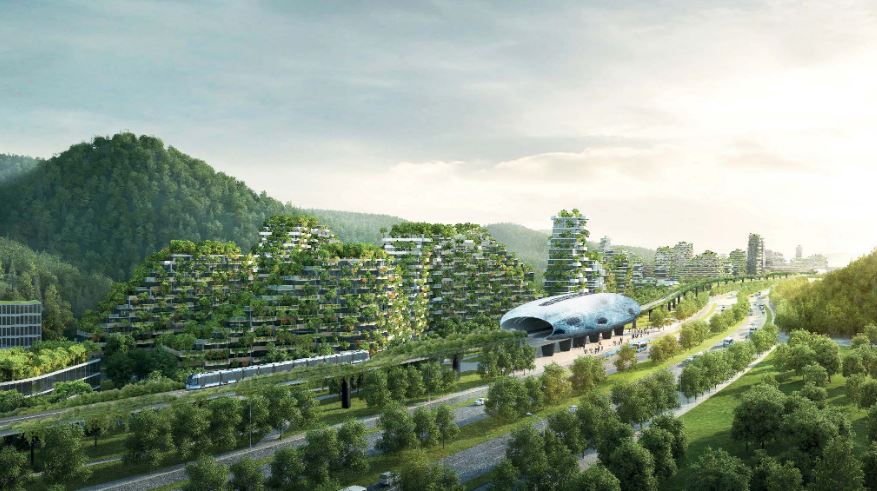
Stefano Boeri Architetti’s forest city

When I first encountered the name “forest city”, I thought of a sci-fi story set in a forest of cement—a Chinese analogy of high-density cities composed of high-rise buildings close together. Instead of a color scheme of gray and brown, the buildings were wrapped with plants and vegetation in myriad shades of green. My imagination is pretty close to the reality.

The concept of smart forest city is the brainchild of the Italian architecture firm Stefano Boeri Architetti (SBA) whose latest bid reportedly places 7.5 million trees and plants in Cancun, Mexico. SBA’s green footprint is global especially in China where rapid urbanization draws international builders, architects and investors to try out their Chinese dreams. On its website, SBA claimed Liuzhou Forest City was “the first Forest City in the world” in which all buildings and infrastructure were “almost entirely covered by plants and trees of a wide range of varieties and sizes.” Surrounded by forests and mountains, Liuzhou, a city in China’s southwestern Guangxi province, makes a perfect location for SBA’s green dream to soar.

Plus, after China’s top leader President Xi’s southern visit in 2018, the idea of “Park City” was hatched, prompting a spree of urban “greening” competition. As the name suggests, Chinese cities are modeling after urban development in New York City, London and the like to build large urban parks in busy urban centers, allowing cities to live in harmony with nature. In other words, urban sustainable development is the theme for many a Chinese city. This August, Liuzhou became one of the first experiment cities in the province selected for a three-year “Park City Development” scheme. Chinese netizens rave about the decision to transform the city into a livable park.       

China has been highly researched and studied by Western intellectuals in the last two decades. I must say I am hearing about, and of, China more frequently outside China than inside. Why has China become of great interest for American scholars and researchers? Are they truly learning about China with good intentions or out of spite? China’s development impresses me and it poses to me as a case study from which to draw lessons and experience. Although China has become a hotspot for “vertical forest,” the concept does not always fit in. One reason is the fact that the biggest cost is on the trimming of trees seasonally. SBA’s first “vertical forest” in Milan shows a resident will have to pay for maintenance every year about US$72  per square meter,  which is around 20 percent more than the normal maintenance price. However, a single adult tree can absorb 48 pounds of CO2 and release about 260 pounds of oxygen per year. The abundance of plants will improve air quality and pollution—exactly what a city needs.     

After China’s top leader President Xi pledged to the United Nations this fall that his country will go carbon-neutral by 2060 in order to meet the Paris Climate Agreement goal, we should not be surprised to see such futuristic ideas as the Vertical Forest City and alike emerge in China like mushrooms. China is switching gears toward sustainable development with strong leadership and determination. By comparison, the largest polluting countries such as the United States, India, Russia, Brazil, and Australia have not signed on a cutback on carbon emissions. In order to meet the target of reducing carbon emissions, China will need tons of trees and plants in cities and towns. Reforestation is a significant strategy to capture a huge amount of carbon dioxide in the atmosphere. In view of the rapid loss of tropical forests, from Brazil’s Amazon rainforest to Indonesia, where deforestation dropped 60 percent in 2017, humankind needs to slow down exploitation of forest resources for economic gain and look for alternatives to substitute such declining natural resources.

I’d like to reiterate an opinion that many a scientists and tree huggers share—we do not lack solutions, we only lack leadership. China may not be a perfect world leader recognized by democratic states. But China has leadership who understands the importance of sustainable development. Like in the U.S., businesses that have strong environmental, social and governance (ESG) criteria tend to maintain good rapport with consumers. Governments also need ESG criteria in order to maintain sustainability and promote prosperity. If only global leaders will emulate one another for best practices of sustainable development, perhaps the concept of “vertical forest city” will be seeded much more widely and wildly. Urban rewilding, why not?       

Under Your Watch

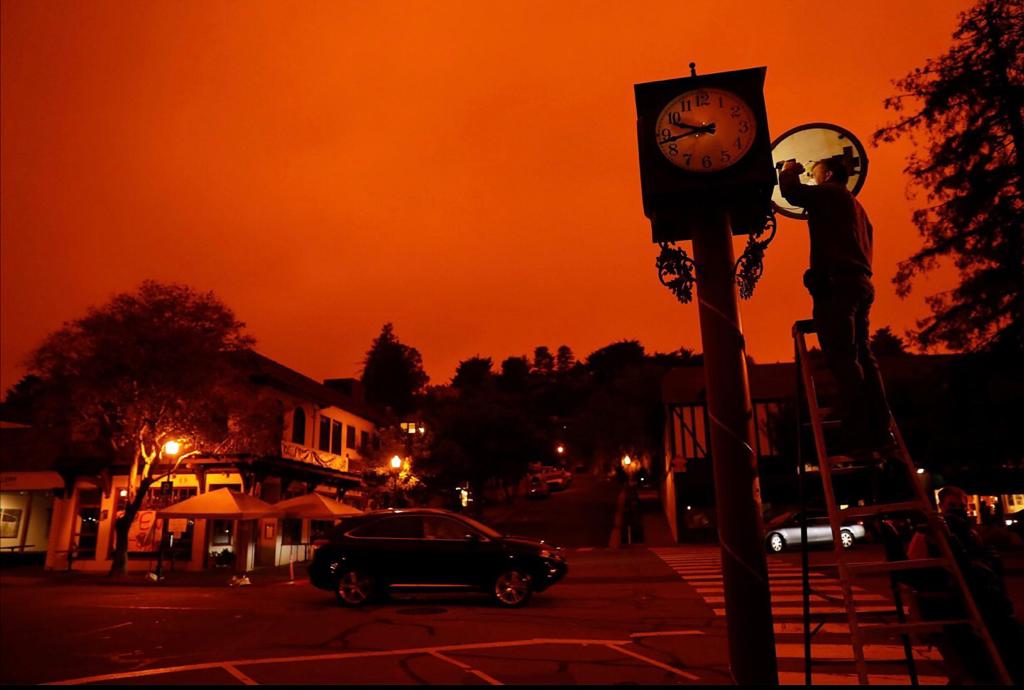
San Francisco’s orange sky due to Californian wildfires.

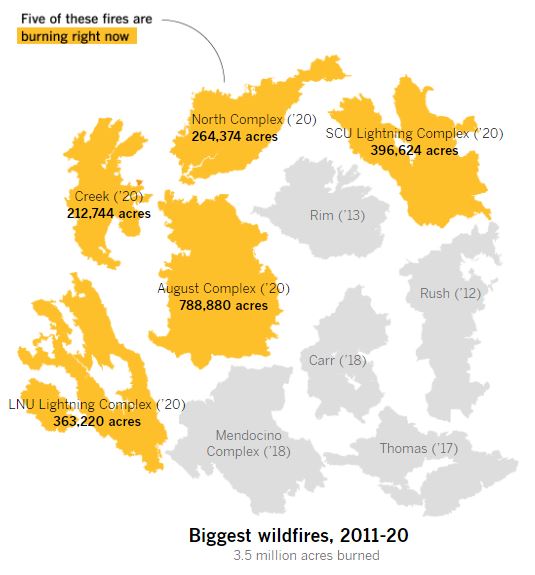
This September when Californian forests were swallowed by blazing fires for days and nights, week after week, the country’s top leader blamed the uncleared dead trees and leaves for flames that “explode like a matchstick” in the forest. When it comes to climate crisis, there is no alternative fact: the year’s wildfires are the worst on record. Of the ten largest wildfires in the last decade in California, five of them took place in 2020. The biggest of the five is the August Complex fire, the largest in state history. Taking the lead of the 45th President of the United States who said blatantly, “It’ll start getting cooler. You just watch,” the cooling of planet Earth’s temperature is now under your watch. 

Californian wildfires analysis from the LA TIMES.

So, what is the temperature of Earth’s relentless fever in 2020? You may remember this year began with the Black Summer in Down Under. The unusually intense bushfires in Australia have destroyed lives of both humans and non-humans. Yes, I have to pigeonhole, if you will, human and non-human for the cause and damage related to global warming. In the Anthropocene, the age of man, humans have caused significant impact on Earth’s geology and ecosystems. Only humans can make amends, or worse, live with the human-induced consequences. If you know Australia is among the top ten most coal-dependent countries in the world, perhaps it is not hard to understand why Australian bushfires happened in such madness. July 2020 was one of Earth’s hottest months ever recorded. It tied with July 2016 as the second-hottest month ever recorded for the planet Earth, according to the National Oceanic and Atmospheric Administration. On August 17, Death Valley in Southern California reached 130 degrees Fahrenheit. Warm and moist air in the atmosphere keeps fueling tropical cyclones that grow stronger, bigger, and faster. 2020 has been one of the most active North Atlantic hurricane seasons on record, so active that meteorologists have run out of human names for hurricanes. Only twice has the National Hurricane Center ever run out of human names for tropical storms and had to turn to its backup: the Greek alphabet. Once was in 2005, when 27 names were given, the last one being Zeta, six letters in. Let us watch how many Greek alphabets will make meteorological history in 2020.      

Heatwave is a silent killer. Humans report sweltering discomfort and even death toll caused by heatwaves when the European summer is becoming increasingly hot. But humans have fewer reports on non-humans that are living under even greater stress from loss of habitats and global warming. In the aftermath of Australian bushfires, more than 100 threatened species were reported heading toward extinction. In addition to the koala which is much loved by people around the world, scientists are calling for rescue efforts of endangered species including 272 species of plants, 16 mammals, 14 frogs, 9 birds, 7 reptiles, 4 insects, 4 fish and 1 spider. I cannot fathom how many non-humans are lost in Californian wildfires, given the fact that the highest-ranking American climate denier has already downplayed the covid infections and its far-reaching consequences. The mishandling of the loss of human lives from covid—an upward trend of 200,000 lives—speaks for itself how little politicians care about the life and death of their citizens. The loss of non-humans in Californian wildfires may never come to light or be valued by politicians on a par with human life.

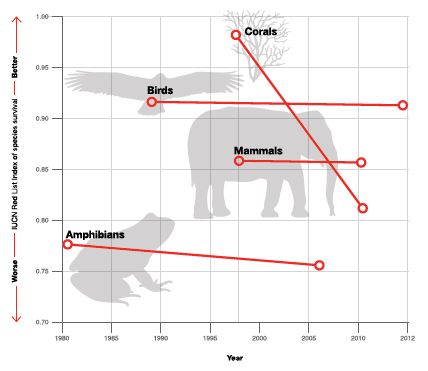
The fact that humans love koalas makes the marsupial receiving the most limelight from media. Endangered species like tammar wallabies or pygmy possums are lesser known to the public outside Australia. About 5,000 koalas in New South Wales may have died in the bushfires, recording as much as two-thirds of their population dropping in less than 20 years. Wildlife conservation is never treated as a priority by mankind. That is why humanity has failed miserably to curb the loss of biodiversity. Scientists warn that one million of the nearly 9 million estimated plants and animals could be pushed over the brink in the next few years by habitat destruction, pollution, overexploitation, the spread of invasive species across the globe, and climate change. The IUCN Red List shows more than 60 percent of the world’s coral reefs are threatened.

Conservation of corals is increasing critical. So is pinna nobilis, or the Mediterranean Fan Mussel. The Mediterranean’s largest clam is now officially recognized and listed as “Critically Endangered” by the IUCN Red List of Threatened Species. The fan mussels reach up to four feet of shell length and are efficient filter feeders that help remove excess nitrogen from waters by incorporating it into their shells and tissue as they grow. Now the ocean is losing these large filters as a result of the mortality outbreak caused by a pathogen that has spread quickly along the Mediterranean Sea. Check out here to see the clam image.

IUCN’s Red List of Threatened Species.

If humans are vulnerable to zoonotic diseases that are caused by germs spreading between animals and people, wildlife is even more vulnerable to the increasing pathogens and diseases that could cause a mortality outbreak. COVID-19 suggests that SARS-CoV-2 has a zoonotic source, thus the novel coronavirus is infectious to humans. Rising global temperatures have fostered new diseases and helped others reappear. While humans are battling covid this year, pygmy hogs—the world’s smallest and rarest wild pig—are under a virus lockdown as well. The first outbreak of African swine fever hit India, killing over 16,000 domestic pigs in the region. Pygmy hogs that were thought to be extinct in the 1960s now survive with humans’ helping hand in a conservation breeding program. But in 2020, they are facing a new challenge of survival. Thanks to a prompt lockdown of the breeding center, the hogs survive. Conservationists said African swine fever could have “wiped out the whole population” of the rare wild pig.  

Conservation stories like this abound. In the end, the story is about the human decision to protect non-humans and promote biodiversity on the planet. Not every species is that lucky. Six months later after Australian bushfires, even the koala has fallen into a political storm over its conservation. The row revolves around a new policy that restricts construction in the habitats of koala in New South Wales, Australia. If all lives matter—human and non-human, saving the endangered species is under your watch, too.

Movie Review: From British Classic to Rwandan Horror

The Personal History of David Copperfield (film poster 2019)

My longest movie dry spell was broken this September. My local movie house reopened with restrictions including seating limits and wearing masks the whole time during the display of film. Masks have been used almost universally to represent characters in theatrical performances. From Cantonese opera to Japanese kabuki, I have seen colorful masks painted on actors’ faces. Never had I thought that this was this audience’s turn, but for a different reason. Wearing a mask to a theater became a prerequisite of my first moviegoing after more than half a year.

Masked on, I entered the theater as if I were about to launch a heist in an empty dark room. This was a test of my psyche as lockdown and social distancing had worn out my trust of the outside. I presumed I might have contracted the invisible virus no matter whether I wore a mask or not. I had it the minute when I exposed my skin save for my nose and mouth to countless airborne particles. In a nearly vacant auditorium, I could say I had the luxury of owning the big screen all to myself, ready for a Victorian time travel to the latest rendition of my beloved Charles Dickens’s work, David Copperfield. Starring Dev Patel as Copperfield, the movie captured the first person voice that was unique to the original work. In fact, the movie title, The Personal History of David Copperfield, highlighted the bibliographical texture of fiction in the voice of “I.” I am not a Brit but I have also the classic lit fever that has burnt many a Briton’s heart these days during lockdowns. People have more time to read and they read classic literature. I don’t just read David Copperfield. I am ambitiously dreaming I could enliven my own adaptation of David Copperfield in my work-in-progress fiction.

When Dickens traveled to America in 1842 he saw slavery in Richmond, Virginia. He detested the cruelty of slavery and after he returned to England, he wrote scathingly about the institution of slavery. One of his observations read:

“In this district, as in all others where slavery sits brooding (I have frequently heard this admitted, even by those who are its warmest advocates): there is an air of ruin and decay abroad, which is inseparable from the system.”

Charles Dickens

I wonder how the author would view his Copperfield in the 2019 film with brown skin and Indian features in the 2019 film. Moreover, the movie has the most inclusive cast: actors of minority Asian and African ethnic background took on important supporting roles. I felt so refreshed visually as new information from the big screen at times clashed with my conventional thinking about the British classic. I was bewildered behind my dampened mask, which was saturated with my short breath. Against the backdrop of the ongoing racial justice movement in America, I cannot help seeing this film with a progressive undertone. Is this what we want for inclusive filmmaking? Will classic ever be classic anymore if a protagonist like Copperfield can be challenged by actors with different ethnicity on the screen? Perhaps characters in my fiction with Chinese names will not matter much if a European could also take a Chinese name.

When Asian American actress Lucy Liu played Dr. Watson in American TV drama Elementary, a contemporary update of Sir Arthur Conan Doyle’s Sherlock Holmes series,  her breakthrough was under criticism because it overturned the convention of a Caucasian male character. Years ago I had done just that in writing under disguise. I adopted multiple Western names to be my article byline in the hope of—upon the editor’s request—appealing to Chinese young readers who were fascinated with English writings by “native English speakers.” How to define native English speakers in China? The person gotta be European looking with an Anglo-Saxon name. Speaking of acting with a mask, didn’t I get the knack of wearing a white-faced mask to write long ago? 

If only Dickens were alive, his jaw might drop like mine because of the excellent performance of the diverse cast of David Copperfield. This is how the 2019 rendition celebrates diversity—there were no black slaves in the picture but only black-skinned ladies with pride and grace (historically, black slaves were in contemporary southern America). No Chinese coolies are in the picture either, but Aunt Betsey’s happydrunk business manager Mr. Wickfield is an Asian (historically, Chinese migrants were building railroads in contemporary western America). The handsome Dev Patel was larger than life in his leading role as Copperfield. My fading memory does not recall the protagonist in the novel as a distinctively attractive man. Anyhow, with my mask on, watching this adaptation of David Copperfield quickened my heartbeat and shortened my breath.      

Hotel Rwanda (2004)

You might ask why would I watch a 2004 movie Hotel Rwanda? The occasion was really surprising to me. I attended a virtual webinar joined by Rwandan politician Valentine Rugwabiza and Vanessa Nakate who is a teenage climate activist from Uganda. Both of these two African women impressed me with their eloquence and determination for climate action. Vanessa’s personal encounter with racism in America might have caught more global attention than her climate activism. From them, I learned that Rwanda is the first African country to present a tougher climate target to the United Nations. The small landlocked country vows to cut emissions at least 16 percent by 2030 compared with a business-as-usual baseline.

In the movie Hotel Rwanda, the hotel that the protagonist Paul Rusesabagina ran as a hotel manager was called Hôtel des Mille Collines, Hotel of A Thousand Hills in English. Rwanda is nicknamed “the Land of a Thousand Hills” for its countryside dotted with mountains, volcanoes and hillocks. Watching the movie took courage. And it’s best not to watch it before bedtime. The bloody atrocity of genocide against the Tutsi in 1994 permeated the film. According to BBC, about 800,000 people were slaughtered in just 100 days by ethnic Hutu extremists. Besides the unbearable weight of a historical tragedy in and of itself, I was also shocked by the white privilege recorded in the film when the Belgians and UN peacekeepers pulled out Rwanda and the French evacuated its citizens, predominantly white Caucasians, leaving behind Africans suffering from ethnic cleansing. What makes life of white people much pricier than those with other skin colors?

I have not written movie reviews since my last one about Weathering With You. The Japanese animated film about climate change has certainly spoken to the young Japanese and alike who are concerned about the adverse impacts of climate crisis. I should give a shoutout to Japanese Environmental Minister Shinjiro Koizumi (小泉 進次郎) for organizing the Platform for Redesign 2020, an online platform for sustainable and resilient recovery from COVID-19. I had the opportunity to watch the launch of the platform on the internet. As I marvel at how technology can change our communication, I urge the global leaders to work together for a peaceful global order. If David Copperfield could be played by any good actor regardless of skin color, if post-genocide Rwanda is leading Africa for climate action, every norm is possible to be broken in the face of climate and public health crises, isn’t it?

Screenshot of the United Nations’ Ministerial Meeting for Climate Change.

My Afterthought of Junkyard Planet

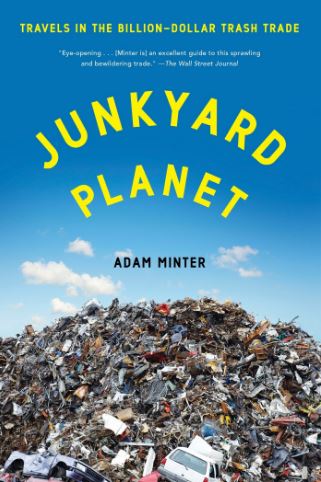
Summer read: “Junkyard Planet” by Adam Minter.

Reduce, reuse, and recycle. This familiar phrase has been around since the American environmental movement spread rapidly in the 1970s. Minimize the amount of waste we create, use items more than once, and put a product to a new use instead of throwing it away. How many of us have done all three? If we look at today’s scrap statistics, we may be dismayed that the progress of this minimalist lifestyle is pathetically slow. According to the EPA, a US federal agency, out of 267.8 million tons of municipal solid waste (MSW), or trash, that was generated in 2017 in the country, 35.2% was recycled, 12.7% was combusted for energy recovery, and 52.1%, that is, more than 139 million tons of trash, was landfilled. In Junkyard Planet by Adam Minter, the author dubbed the US “the Saudi Arabia of Scrap” for the reason that there’s more scrap than the people can handle on their own. The US is a land that lacks real demand for manufacturing materials on this junkyard planet.

It was then, it was now. The US has not changed much in terms of speeding up e-waste recycling. E-waste represents only a small percentage of the overall MSW, and yet it has harmful effects. In fact, since China banned foreign trash imports in 2017, the US’s e-waste is now found at the border of China, precisely, Hong Kong. Together with the electronic discards generated locally, Hong Kong has become a major global hub for dismantling electronic waste, legally and illegally. What Adam Minter, a Bloomberg News journalist, observed in China ten years ago during his research for his first book, Junkyard Planet, is as familiar as old jeans to me. I grew up in Guangzhou, the capital city of China’s economic powerhouse Guangdong province. As Minter wrote, “interests matter more than values” in an often-overlooked scrap industry. What is perceived environmental in e-waste recycling is more or less about how much money the scrap could be regenerate if it is reused. In my mind, recycling is to reuse.

Electronic goods contain a plethora of toxic components, including mercury, lead, cadmium and lithium. If not handled properly, e-waste would cause a series of environmental hazards and public health problems. The so-called recycling in developing world is when unwanted electronics are resold to locals who cannot afford firsthand goods. If these electronic discards cannot be repaired and resold, they will be detached—the plastics and metals will be separated and resold to manufacturers to produce new products. The remainder of the scrap which cannot be reused will be combusted for energy recovery or landfilled. In developing countries, many low-income families are dependent on recycling scrap for a living. In China, many migrant workers from impoverished communities come to big cities like Beijing, Shanghai, and Guangzhou to make their first bucket of gold from the scrap trade. 

In his book, Minter showcased his expertise in the industry after he spent years learning the trade as a son of a Midwestern American scrapyard owner. He compared recycling practices in China and the US, and traveled to world’s overlooked corners to research scrap recycling. He wrote, “I’ve seen dumps like Leonard’s in India, Brazil, China, and Jordan, salted with impoverished people, often mothers and children, literally scraping at a living. The most famous is surely in Mumbai, movingly depicted in the film Slumdog Millionaire, its orphans grubbing in search of just enough recyclable trash to exchange for food.”

To international e-waste watchdogs, Guiyu in Guangdong province is like an old friend. It used to be one of the world’s most dangerously polluted towns by e-waste. Its name often appeared in Western mainstream media critical of China. In Junkyard Planet, the author also did an exposé about his adventure on site. Today, despite that the legacy of e-waste pollution remains visible, the government-led makeover is taking effect. Noticeably, the outdoor scrap business has moved indoors, and a wastewater treatment plant has been installed (See below video). The town has been transformed into China’s experiment with circular economy. The EJ Atlas, an environmental website, has this description about Guiyu National Circular Economy Industrial Park. It wrote: “Guiyu is a lesson that a ‘war on pollution’ is best fought through preventing the pollution in the first place.”    

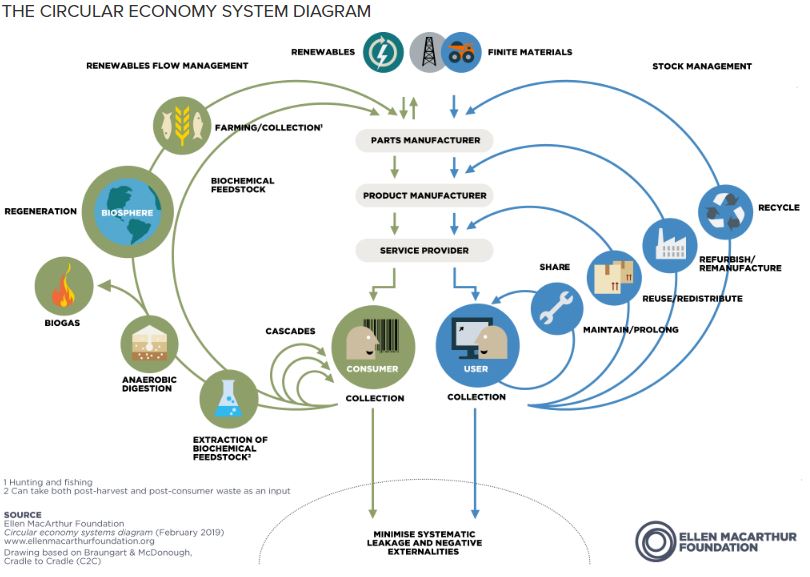
When it comes to e-waste pollution, what happened in Guiyu is repeated elsewhere in inland provinces in China as well as by desperate people in Ghana, Nigeria, India, Bangladesh, and places that you may not think of. To Americans, recycling e-waste is a moral issue. It’s a feeling-good internal call for such action to take place. There is no law enforcement or penalty to individuals if we choose to dump our personal devices into garbage. There is also no incentive for consumers and sellers to slow down the pace of replacing their older but functioning devices. In the book, Junkyard Planet, the author even explained plainly that Apple boasted its efforts to “use fewer and greener materials” and yet “all the while making its devices more difficult for individuals to repair and refurbish.” Take the MacBook Air for example. The author expounded that “. . . [its] thin profile means that its components—memory chips, solid state drive, and processor—are packed so tightly in the case that there’s no room for upgrades (a point driven home by the unusual screws used to hold the case together, thus making home repair even more difficult).” Indeed, refurbish and repair are two of the five “Rs” of circular economy. The other three “Rs” are “reduce, reuse and recycle.” As a new iPhone model—the 12th generation of its kind—is the talk of the town this fall, shouldn’t Tim Cook rethink how to attract loyal Apple fans with circular economy in mind?       

In my years living in China, I witnessed and even participated in the scrap recycling trade as an environmental (and perhaps a little mercenary, too) resident of Guangzhou. I saw how hard-working laborers painstakingly sorted cardboard and tin cans in piles and how dexterously they detached metal parts from old TV sets and refrigerators. If I frequented the recyclers in walking distance from my high-rise apartment building, the owner recognized me and they usually offered me better prices for my scrap, which in their eyes were treasure.  

Unlike in China, I can’t sell my used newspaper and home appliances to an American recycler. The best I can do is to get a tax deduction slip after I donate my used goods to nonprofit charitable organizations. No money transaction. I only can leave shipping boxes in the recycle bin or have the mover haul away the old appliance when he installs the new. I may end up giving him a tip rather than he giving me the monetary value of my old junk. Welcome to the gratuity-friendly American labor market! As Minter wrote, “Recycling is what happens after the recycling bin leaves your curb. Home recycling—what you most likely do—is just the first step.” I often wonder: How much will the recycler gain from my recycling bin?  

Compared to China or other OECD countries, the US is not doing enough in e-waste management. Whether it is a matter of law enforcement or a change in consumer behavior, the US remains in its own bubble of exceptionalism and extravagance. As China is tightening rules on hazardous waste disposal, upending the global recycling industry, will the US stay inactive? Is recycling “a morally complicated act” in our shared junkyard planet?

Circular economy diagram by Ellen MacArthur Foundation.

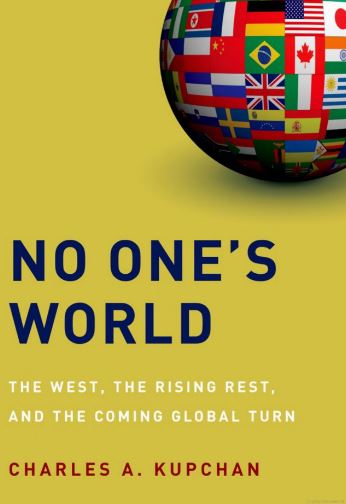
My Afterthought of No One’s World (Part II)

Continue Part I

In no one’s world, different kinds of political systems will have their strengths and weaknesses. The author made a very good point about how we should respect other cultures and religions and seek interest-based cooperation. He wrote, “The West’s willingness to embrace a more inclusive conception of legitimacy—one based on responsible governance rather than democracy—would certainly help widen the circle of nations ready to stand against countries that are predatory toward their own citizens and threatening toward the international community. (Kupchan, p.191)” With this piece of advice in mind, the US may re-establish leadership in climate action with China, whose political values are contrary to those of the US. This might be accomplished only if the US were in the good hands of competent leadership.

The benefits of US-China collaboration outweigh its drawbacks. As Bill Gates said, the interdependence between the US and China can lead to more dialogues and mutual understanding. Businesses regardless of nationalities are often drawn to secure environments where either accountable leadership and/or stable economy are nourished. China has the efficiency that American entrepreneurs crave whereas the US has a high degree of market transparency that Chinese investors admire. If the world’s two biggest economies collaborate based on mutual interests, when one partner is “under the weather” like what we are seeing now in the US leadership, the other partner could be perceived as a functional part of a working machine, if you will, to get the world’s economic activity going.

Well, China has just done that. It is on the track of economic recovery toward green economy. Among the big emerging markets, China is an assurance for global investors and rating firms. China’s green bond market has expanded at incredible speed since opening in 2015. Last year in the fourth anniversary of the New Development Bank, formerly referred to as the BRICS Development Bank, the bank plans to increase the stock of green infrastructure in its portfolio, which involves prioritizing investments in renewable energy, energy efficiency, sustainable waste management and clean transportation. This May, China has excluded “clean coal” from a list of projects eligible for green bonds. If the US welcomes a green economy to create jobs, reduce wealth inequality while adapting to climate change, China’s partnership is only complementary but not contradictory.

In No One’s World, the author gave a brief history of China’s communal autocracy. As a witness of China’s reform of state-owned enterprises (SOE) in two decades, I disagree with Kupchan’s underestimated account of unemployment in the economic reform. He wrote, “China’s gradualist approach to privatization protected employees in the state sector. As a consequence, China did not confront the high unemployment and large-scale dislocations that accompanied ‘big bang’ transitions of the sort that took place in the former Soviet bloc. (Kupchan, p.95)” The author’s source for his statement may have come from an elite background but he obviously had not spoken to ordinary folks like my parents. Tens of millions of Chinese people lost their “iron bowl” jobs. I dedicated a whole chapter in my book, Golden Orchid, to the lost generation in China, among them were my parents.

In addition, in Mr. Kupchan’s account China’s transition to markets and private ownership seems to be too effortless to be true. What about the political upheaval in 1989? What about the sacrifices that ordinary Chinese have contributed to the country’s glory? How much land grabbing took place? How many lives were lost in profit-chasing, shoddy projects? One thing to note. What we see as the status quo of legacy admissions in leading universities in the West is also seen in China. After all, not everyone can be enrolled in Peking University and Qinghua University, the Chinese equivalent of Harvard and Yale. The Chinese elites that dominate  renowned Western universities are more or less from nouveau riche families or associated with hereditary socioeconomic privileges in China. Their impression of China might be fragmented and even tantalizing to the Western readers. There’re many reasons that Chinese middle class appear to be satisfied with their status quo. Mr. Kupchan should have looked into how education about the party was instilled in Chinese people’s mind since their coming-of-age years. Chinese people don’t have a state-recognized religion but worshiping the party doctrine certainly plays an important role in social mobility.       

In no one’s world, any country can be a trendsetter. China can be one partly because it welcomes international cooperation in research and development. China’s state-led “Made in China 2025” has overturned Kupchan’s statement that the country “tends to copy Western technology, not to improve upon it. (Kupchan, p.103)” China is demonstrating to the pandemic-ridden world how to keep its economic recovery green and sustainable. Shenzhen, a southeastern city adjacent Hong Kong, has become the first Chinese city with full 5G coverage. While China doesn’t encourage immigration, it is opening its doors to foreign talents, investments and cooperation. On the contrary, the US is closing its doors to immigrants, who in the past have contributed to its development.

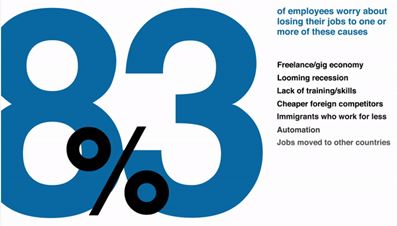
The 2020 Edelman Trust Barometer

Americans need to be worry if the country’s legal immigrants continue to shrink. Not because how many local jobs are taken by immigrants or lives are lost by immigrant felons, but because American population is aging and productivity is declining. According to World Bank, the US fertility rate, that is, the number of children that are projected to be born to a woman in her lifetime, has declined in 10 of the last 11 years since 2007.  The rate was 2.12 children in 2007, falling to 1.73 children in 2018, the latest year that the data has been calculated. For the population in a given area to remain stable, an overall total fertility rate of 2.1 is needed, assuming no immigration or emigration occurs. America falls behind the mark.

The US is a melting plot as immigrants equate the cultural assimilation and acculturation with Americanization. The US is a nation built by immigrants and their descendants together with indigenous people in the American continent. Ideally, the US should do better than homogeneous countries (e.g. Japan, Iceland) to respect and understand other beliefs and values while upholding our identity as a nation. Kupchan pointed out one of the great assets of liberal democracy is “its capacity for self-correction.” He wrote, “Political accountability and the marketplace of ideas have regularly helped democracies change course. (Kupchan, p.166)” Immigrants have enriched our economy and society. “The marketplace of ideas” lies in diversity and inclusion.

Furthermore, climate change does not respect borders and it is altering migration patterns, both humans and wildlife. It can only be solved with cooperation and collaboration across borders and worldwide. Perhaps climate change has induced good timing on which Kupchan emphasized as an ingredient to modernity for different societies. The author called for “pragmatic partnerships, flexible concerts, and task-specific coalitions” amidst renationalization of politics in Europe and partisan polarization in the U.S. I find these are all good strategies for global leaders to strike a balance between development and sustainability, between self-interest and the common good in no one’s world. 

“If the West can help deliver to the rest of the world what it brought to itself several centuries ago—political and ideological tolerance coupled with economic dynamism—then the global turn will mark not a dark era of ideological contention and geopolitcal rivalry, but one in which diversity and pluralism lay the foundation for an area of global comity.”

Charles A. Kupchan